Introduction
When considering how to make energy savings, lifestyle changes and environmental improvements within the home, many of us are concerned about the cost implications of any recommended measures – and rightly so. For example, it’s not just the cost of buying say top up insulation for the loft; it’s also the additional cost of paying a tradesperson to carry out the work. There’s also the disruption factor to consider.
We have therefore tried to ensure that the guide includes money saving advice and work that only requires minimal effort on your part. Where possible, we will also advise you of any measures that may be eligible for grants. For some measures it may be advisable to hire a reputable tradesperson and so advice is also given on how best to find someone you can trust to carry out the work to a good standard and at a fair cost. Check out Section 8 for information about grants and finding reputable tradespeople.
Article Links
There are also many links to articles, products, and services. These are not necessarily an indication that the information in the article is correct or that the product or service is recommended. Some of the information mentioned in the articles may be contradicted by other journalists or companies, and products can often be found to lose their efficiency or be unreliable in the long term.
You will notice that a number of links are to organisations that are specific to the area of Salford and this is because Salford is the area that we are located in and carry out most of our community work.
Other areas will have similar organisations and a web search should bring up the relevant details.
Note that we do not earn any monies or incentives from the articles or product links.
Reviews
Use our information and the links to any product or service, as a small part of your own research. If you intend to carry out any work that requires buying a product or service, check out as many reviews as possible. In particular, pay close attention to negative reviews as they provide a balance to the positive reviews that attracted you to the product or service in the first place.
By taking action such as reducing your energy usage, making lifestyle changes or carrying out eco-friendly improvements around your home and garden, you will join others around the world in making a positive contribution to the environment. This in turn helps wildlife and nature and you may also save money!
About the Sections
To make the guide more manageable, it has been split into a number of standalone sections. This will help householders who prefer to concentrate on making improvements one step at a time.
Weather can also play a part. For example, you may wish to improve your heating efficiency before winter sets in and use the summer months to create a wildlife friendly garden or maintain the outside of your home to save energy.
You may notice that some information is repeated in more than one section. This is because the information has some relevance to more than one section covered, and we know that not everyone wants to read the entire guide in one go.
It will also be the case that a link from elsewhere in the website or from an outside source may take you directly to the section you are interested in.
Section 2 Heating your Home (currently relevant to gas central heating only)
Section 4 Insulation and Draughts
Section 6 Air Quality and Ventilation
Section 7 Issues and Energy Savings outside of your Home
Section 8 Finding good Tradespeople and Searching for Grants
Section 9 Eco friendly shopping and more
Section 10 Cleaning and Maintenance
SECTION 1 Your Utility Bills
Firstly, take a look at your most recent gas and electric bills and note down how much energy you’ve used in the last 12 months. Additionally, if you have a water meter, jot down how much water has been used.
Assuming you are able to carry out a few water and energy saving measures, then in 12 months’ time you will be able to compare your usage and see what savings you have made. If utility prices haven’t increased, you will also reduce your bill.
♦ The next step is to compare energy suppliers
Currently, we are not allowed to change water suppliers, but now may be a good time to check out whether it’s worth changing the company that supplies our gas and electric.
If however, you are happy with your existing supplier and don’t want the hassle of moving over to a different company, then at least check your bill to see whether a cheaper tariff is on offer.
For those of you who would like to compare your tariff with other suppliers, then online is a good place to start. Our advice* is to use either one or both of the energy comparison websites created by Citizens Advice and the Which Consumer Group.
Alternatively, contact your local council as they may have a list of impartial local energy advisors who should be able to help you for free. An appointment with your local Citizens Advice centre could also be a good call.
By changing tariffs or your energy supplier, you should be able to save some money and this can fund some energy efficiency improvements to your home. Over time, this will bring about additional savings.
*The Benefits to using either the ‘Which Magazine’ or ‘Citizens Advice’ energy comparison website:
With information that can be found in one of your recent energy bills you will be asked to input certain details such as your postcode, existing tariff details and annual energy usage. Importantly, you will not be asked to give out your telephone number or email address. This means that you won’t receive any follow up calls or emails.
Both organisations are setup as charities and from either website you will be given details of any tariffs that can reduce your energy bill.
You will also be able to check out ‘green tariffs’, fixed rate deals, exit fees, customer service ratings and information on keeping any existing discounts (such as the warm home discount).
For anyone concerned about the hassle of switching energy suppliers, you will be able to choose one that has subscribed to the energy switch guarantee scheme. The aim of this voluntary scheme is to make it safer and as hassle free as possible to change your energy supplier.
As a rule most energy switching comparison websites only display tariffs from suppliers who offer commission; however, the ‘Which’ and ‘Citizens Advice’ websites present all tariffs. Be aware though, that other comparison sites may have negotiated exclusive and better deals with some energy suppliers.
Note: As with other energy switching sites, no information is included as to the financial stability of a particular energy supplier. Although customers are covered in the event of an energy supplier going bust, it may a while before you are transferred to another supplier (unlikely to be your choice and may also be more expensive).
♦ About Water Meters
If you do not have a water meter installed, your bills will be calculated on the rateable value of your home. Depending on your water usage, it may well be worthwhile to ask for one to be installed. Firstly though, you need to have a rough idea as to how much water you use.
To do this, go to your water utilities website and look for the water usage calculator. Next, enter some details about your everyday water usage. After these details have been entered, you will immediately be able to see the amount of money you could save by installing a water meter.
For anyone living in the Salford area, use the United Utilities Calculator
As many residents are aware, not everyone can have a water meter installed, as for example, the majority of residents living in apartments built prior to 1990. In those instances it is possible to put in a request for your bills to be based on the average water usage of the number of people in your household. This can work out cheaper than a bill based on rateable value and is especially so for a one or two person household with average water needs.
Our advice therefore, is that you contact your water utility company to find out whether savings can be made.

SECTION 2 Heating Your Home
Recommended Room Temperatures
No matter what type of home heating system you have, you will have a preference as to what the ideal temperature your thermostat should be set. As this can vary from person to person, it makes sense to make use of any guidelines that are available.
Government and other organisations such as Age UK recommend that whatever type of heating system you have, your living room should be maintained at between 18 to 21°C. This will protect the health of most people, but some older people or those with health problems may require slightly higher temperatures.
To help you sleep better at night, lowering the temperature by a couple of degrees is advisable. For infants, the recommended temperature whilst asleep is between 16 and 20°C.
Thermostatic Control Savings
It is worth pointing out that if you turn your thermostat down by just 1°C you will reduce your energy bill by up to 10%. If you still feel comfortable then great you’ve saved energy and some money. Wearing extra layers of clothing can be a great help in getting used to lower temperatures. Some types of clothing keep you warmer than others, with wool and fleece clothing being good examples.
Heating Your Home Struggles
Of course there are many households that struggle or do not have the means to warm their home to the recommended temperatures. Our guide offers lots of useful information, but for extra help and advice it will be worthwhile contacting your local council, energy supplier, citizens advice and other charities such as the NEA (a National Fuel Poverty Charity).
They may be able to help with applying for grants and other funds relating to financial hardship. Practical help may also be offered to make your home more energy efficient.
Find out a little bit more about the type of energy advice, help and grants that may be available:
1. Help to improve energy efficiency in the home – Salford City Council
2. Grants and benefits to help you pay your energy bills – Citizens Advice
3. Warm and Safe Homes Advice – NEA (National Fuel Poverty Charity)
Note: Although we’ve given a link to our local council (Salford), there should be the same equivalent information available through your own local council.
Central Heating Types
There are various types of central heating systems of which gas is by far the most popular and is currently the only one covered in this guide. At a later date we will cover the other forms of central heating such as underfloor heating and storage heaters.
Gas Central Heating Controls:
Tests conducted within the ‘Energy House Facility’ at Salford University, showed that the costs of running a gas central heating system with a full set of temperature controls was 40% less than the same system operated with a timer only. Great cost savings and energy savings are therefore possible.
Okay, from the above, we can safely deduce that if we have a full set of heating controls – a programmer/timer, room thermostat and radiators with thermostatic radiator valves (TRVs) and know how to use them, we will save energy. Assuming your energy tariffs rates don’t increase, your bills will be lower.
However, from experience we know that many residents struggle to understand their heating controls. In the following sections we will attempt to explain the basics of what each control is for and how to use them.
This may not be enough as there may be a variation in the way different manufacture’s controls work. You may also not have the recommended controls to efficiently heat your home.
Therefore, if your home seems to be missing a control or you are unsure how best to use your controls or if in fact you are having heating problems in one or more rooms, then note down the issues and also the make and model of your boiler and room thermostat.
Next, contact either the manufacturer, your regular service engineer (if applicable) or your local friendly energy advisor. Ask them for help. The internet can also be a good source of information.
♦ Programmer/Timer Settings
For those of you with a regular lifestyle and assuming you are able to program your heating times, then setting the timer for the heating to come on half an hour before you get up should be sufficient to warm up your home. Remember to also set the timer so that the heating goes off about half an hour before you leave home. Similar settings can be used for your return home and bedtime.
Note that the programmer may not be a separate control and could be housed within the room thermostat unit or attached to your boiler.
♦ Room Thermostat
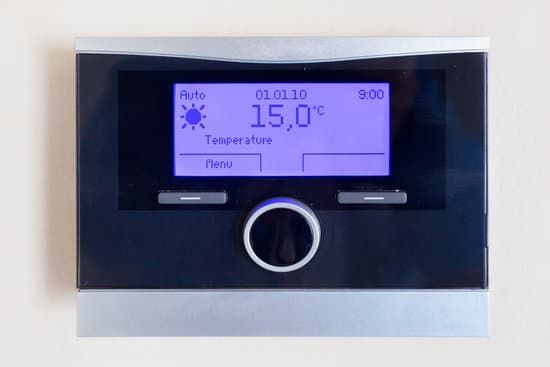
A room thermostat allows you to set the temperature in the room that it is located in. It has a sensor that measures the air temperature around it and then communicates to your boiler that it needs to be switched on or off to maintain your exact chosen temperature. It doesn’t matter what the temperature is outside.
A well-insulated home and an efficient heating system will result in fewer ‘requests’ from your room thermostat to switch on your boiler. Lower energy use and lower bills will be the result.
You should also be aware that the room thermostat can only communicate with the boiler during the times that the boiler has been programmed by you to be switched on. For example, from say 6am to 9am and 5.30pm to 10.30pm. Note that sometimes the room thermostat and programmer are housed within the same unit.
Be aware that turning up your room thermostat doesn’t speed up the rate at which your home heats up, it just heats it to a higher temperature and costs you more – especially if you then forget to turn it back down!

♦ Thermostatic Radiator Valves (TRVs)
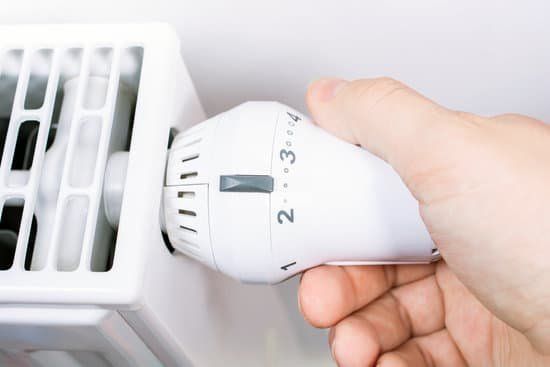
You will probably be aware, that in most modern homes, you can increase or decrease the warmth of a room by adjusting the TRV attached to the side of your radiator.
You will notice different numbered heat settings, popularly ranging from low (0) to high (5). There is also a frost setting indicated by an asterisk (*). Concealed within the head of the TRV is an air temperature sensor and each heat setting position on the valve corresponds to an approximate temperature setting as calibrated by the manufacturer.
As a rough guide, each numbered setting increases or decreases the temperature by 4°C. So if you turn the valve to setting number 3, you could expect a room temperature of about 20°C. Turning it up to number 4, should therefore increase the temperature to 24°C.
Be mindful, that factors such as draughts, direct sunlight or even by obstructions such as curtains can fool the valve’s temperature sensor into thinking the room is warmer or colder than it is.
TRVs are not generally attached to radiators in all rooms. In fact, the advice given by heating engineers is that a TRV should not be fitted to a radiator if it is located in the same room as the room thermostat and should also not be fitted to a radiator in a bathroom.
Explanations are given below:
Why a radiator with TRV shouldn’t be fitted in the same room as a room thermostat
If for example, the TRV in your living room was set to 3 (and this was equivalent to 20°C), then under normal circumstances, as soon as the temperature hit 20°C, your TRV would turn your radiator off. This saves energy as your boiler will not need to supply as much hot water to your central heating system.
If however your living room had a room thermostat and it was set to a higher temperature (for example 21°C), then the room temperature will never reach 21°C (because the TRV with the lower temperature is stopping it)) and no signal will be sent to the boiler to switch it off. Your boiler will therefore remain switched on and continue to consume energy, resulting in a higher than necessary bill.
The solution in these circumstances is to fully open your TRV by turning it to its highest setting and keeping it at this setting. In this way there is no conflict, as your room will heat up to the exact temperature you’ve set your room thermostat to.
Why a radiator with TRV shouldn’t be fitted in the bathroom
As the steam from your shower or bath dissipates around your bathroom, it heats up the bathroom causing condensation and your TRV reacting to the higher temperature turns off your radiator. So just when you need the heat to reduce condensation issues and keep your bathroom warm for a while longer, your radiator is providing the opposite.
This is not a major problem, but there is another reason given by heating engineers for having at least one radiator without a TRV. They recommend at least one radiator within your gas central heating system should be fully open. This ensures that in the event that all other radiators are closed, the hot water flow rate is maintained and boiler performance is not detrimentally affected.
If TRVs are fitted to all radiators, it is likely that an automatic bypass valve has been fitted. This allows a constant flow rate, no matter how many TRVs are open or closed. This ensures that an even system pressure is maintained and helps improve boiler performance.
Now that to some extent we’ve covered the main controls, we’ll take a look at the heart of the system which is the boiler.
Domestic Gas Boiler
All domestic gas boilers work on the principle of burning gas to heat up water which is then pumped through the radiators in your home before returning back to the boiler. However, boilers cannot capture all of the energy as some of the hot gasses are lost to the outside.
Depending on the efficiency of your boiler and how it is set up will determine how much you can save in energy and importantly reduce your gas bill.
All new boilers come with an energy rating of which the maximum is A. With an A rated boiler (90%+ energy efficiency) most of the energy can be used to heat the water for your central heating system rather than being lost or wasted to the outside.
For example, if a boiler has an energy efficiency of 95%, then 95% of the energy used by the boiler heats up the water, whilst the remaining 5% is effectively lost.
If a boiler has an energy efficiency of 60% (such as an old non-condensing boiler), then 60% of the energy used by the boiler heats up the water, whilst the remaining 40% is effectively lost.
Nowadays most modern central heating boilers are of the combi condensing boiler type, and this is what we are going to concentrate on as substantial cash and energy savings are possible.
Combi Condensing Boiler
Combi Condensing Boilers are designed to heat not only your home, but also supply hot water for your daily needs such as washing up or having a bath. There is no need for a separate hot water tank and when set up correctly, combi condensing boilers will capture most of the energy that otherwise will be lost or wasted to the outside.
There are likely to be two main controls:
♦ Boiler Flow Temperature Setting
The main heating control is used to set the flow temperature of the water that passes through your boiler, and as mentioned a little earlier it will then be pumped through to the radiators and subsequently returned back to the boiler where the process starts again.
The factory default flow temperature (outgoing temperature) setting can be as high as 80°C, whilst the water returning to the boiler is usually set to be 20°C lower (60°C in this instance). This means that 20°C can be given out as heat to your home via the radiators.
At the flow temperature quoted above, your radiators will heat up quickly, but the downside is that more energy will be used over a given period of time which leads to higher bills.
For condensing boilers, the lower the flow and return temperatures of the system, the greater will be the energy savings and assuming the unit price of gas doesn’t increase, your gas bill should be lower.
In fact condensing boilers won’t run in condensing mode (to start taking advantage of reasonable money and energy savings) unless the return water temperature to the boiler is below 55°C. An added benefit is that at lower flow temperatures there is less stress on your boiler and this should increase the boiler’s lifespan. Read the ‘heatgeek’ article for an explanation of the many benefits of a low temperature heating system.
It is unlikely that you will be aware whether your boiler has been set up to run at the default factory setting or the most energy efficient setting. The recommended flow temperature will be different for each home and will be dependent on the daily outside temperature, how well insulated your home is and even the size of your radiators.
Potential savings can be seen in the table below. The tests were conducted by Salford University at their Energy House on behalf of Nesta (National Endowment for the Science, Technology and the Arts) a registered charity in England.
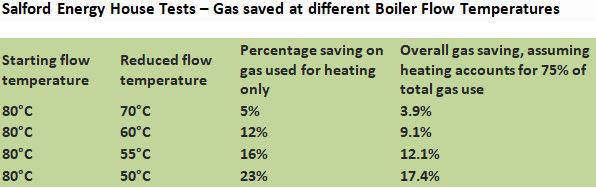
A consequence of reducing the flow temperature is that the radiators will not feel as warm as before and your home will take a little longer to heat up. Experiments at the Salford Energy House suggest that the increase in warm up time after reducing flow temperatures from 80C to 60C is between 10-20 minutes.
To maintain your previous comfort level, then by all means program your heating to come on a little earlier but be aware that your savings will not be as good as they could be.
Note: Many householders will be tempted to increase the setting of the TRVs. Doing this will also reduce the potential cash and energy savings and can even increase the gas usage in comparison to before.
You may need to experiment a little before finding the ideal flow temperature. The general suggestion is that you reduce flow temperature in increments of 5°C and assess how comfortable you feel. Keep your program times and TRV settings the same as before, but be aware that if the flow temperature is set too low, the rooms in your home may never reach the temperature that you desire.
Additionally, regular adjustments to the flow temperature are advisable when the outside temperature is forecast to sharply increase or decrease.
With help using the “heatinghub” and “Nesta”, you may be able to make the adjustments yourself. And of course, your gas boiler instruction manual should also give details.
Alternately and assuming you have your boiler serviced annually, you can ask the heating engineer to show you how to change the settings. It may also be possible that the engineer (at a cost) can fit a weather compensator or load compensator device that automatically adjusts the flow temperature.
The “heatgeek guide” gives a good explanation of how a weather compensator or load compensator works and puts forward a few pros and cons for each.
Nesta’s commissioned tests at the Salford Energy House suggest a 4% saving with an installed Weather Compensator and 2.5% with the installation of a Load Compensator.
♦ Hot Water Controls
Hot Water Outlets
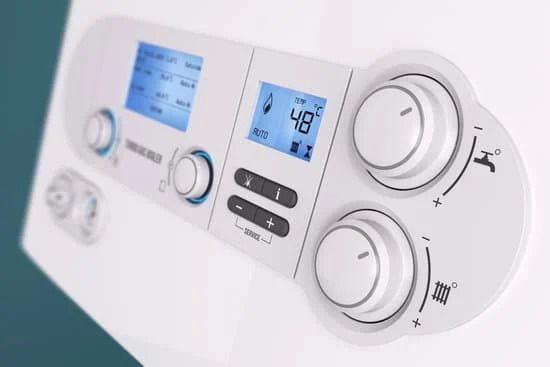
The main control is used to set the temperature of the water supplied to your hot water outlets such as in the kitchen and bathroom and will also include your shower if it is not electric. The default factory setting for the water to be heated is likely to be 50 or 60°C.
At these temperatures there is a risk of scalding and although the temperature will have reduced a little by the time it reaches your hot water outlets, you may need to mix the hot water with cold water before it can be safely used.
It’s worth noting that the HSE (Government Health and Safety Executive) state that the temperature should not exceed 44°C* to avoid scalding. Consider setting your hot water control to 44°C* or a bit lower. The scalding risk is virtually eliminated and you will also reduce your gas bill.
Nesta commissioned research suggests that a typical household would make an annual saving of £26, which equates to about 2% off their gas bill.
The adjustments to change the hot water temperature on your boiler should be reasonably simple and instructions can usually be found in the manual supplied with the boiler.
Alternatively look online for video instructions or wait for your heating engineer to carry out his annual service and ask him to show you how to make the adjustments yourself.
The Groundwork video shows how simple the hot water controls are on some boilers.
* Legionella
Although the scalding risk at 44°C or lower is virtually eliminated, you should be aware of the risks of legionella, a bacteria found in not only natural water sources, but also water systems such as in the workplace or home.
Under certain conditions the bacteria can grow and will increase the risk of catching legionnaire’s disease and other perhaps less serious infections such as Pontiac fever.
Stagnant water is the main risk of legionella bacteria spreading, whilst vulnerable people are most at risk of catching it. It can be caught through contaminated water droplets or through drinking water if it gets through to the lungs.
The general recommendation is that stored hot water (such as boilers with a separate hot water tank) should be heated to 60°C, as this will kill legionella bacteria within a couple of minutes.
Combi boilers heat water on demand and as under normal circumstances water is used regularly throughout the day the risk legionella is considered minimal.
Households with a combi boiler and vulnerable family members may wish to heat the water to 50°C as any legionella present in the water supply will not grow.
After returning home after a stay away such as a holiday, visiting friends or relatives you may want to flush out your water system and heat up your water to 60°C. As mentioned a little earlier, any lingering legionella will be killed off within minutes.
Hot Water Preheat
Many modern boilers have what is called a Hot Water Preheat function and this would have probably been switched to the on position when the boiler was installed. The benefit to you is that in comparison to a boiler with no Preheat function, the time taken for heated water to reach any of your hot water outlets will be greatly reduced.
However, to do this, your boiler will need to ‘fire up’ at regular intervals to maintain the heat of the hot water. As to be expected, extra gas is used and according to a ‘heatinghub’ article, around 500 to 750kwh of energy may be used by some households. With the October gas priced capped at 10.3p per kwh, your gas bill could be up to £77 more than necessary.
For most but not all boilers the preheat function can be switched on and off. There may also be an option to program the times that the preheat switches on and off. This is useful if you are out at work or away from your home for regular periods during the day. When switched off you will substantially reduce your energy use and therefore you gas bill.
The heatinghub article article has links on how to switch off the preheat function on various makes of boiler.
If after turning off the preheat function you find that there is too much of a delay before the hot water reaches your taps, then rather than turn the preheat function back on, it may be worthwhile investing in a Combisave Valve device.
The device effectively restricts the amount of water supplied to your hot water taps until the water is hot enough. This will save gas and water and will not only reduce your gas bill but also your water bill if you are on a water meter. Savings can therefore work out to be slightly more than just turning off your preheat function. There is of course the cost of the Combisave Valve device and its installation to consider.
Optimum Heating Requirements Around The Home
Each room in your home will have different heating requirements. Most will seem obvious, but it’s worth checking each room to see whether the radiators are working as they should be and that the heat settings are correct.
As the living room is where you are most likely to spend most of your spare time, the radiator setting will probably be set to 3 or 4. This assumes that the room thermostat is not also located there.
If you only spend a small part of your day in a particular room, then it’s just a case of remembering to adjust the TRVs down a few notches when you leave.
Rooms that are infrequently used should be okay at a lower temperature, perhaps even a frost setting if you have one.
If a room shows any signs of damp, then a higher set temperature may be required. However it’s possible that inadequate ventilation is the problem. Efficient extractor fans in the bathroom and kitchen plus trickle vents or similar in the other rooms solves many damp issues.
Heating Problems
A little earlier we discussed the problems of a TRV being located in the bathroom and also in the same room as the Room Thermostat. There are also a few other problems that many householders report, and if not properly dealt with, these can result in higher energy use. A selection of these issues is given here:
● Query – My radiator feels cooler than it should do and never seems to heat up properly, particularly near the top.
Possible Explanation – This can indicate trapped air bubbles and therefore may require ‘bleeding’.
● Query – My radiator is lukewarm both top and bottom.
Possible Explanation – It may be that your whole central heating system needs ‘balancing’. A balanced system means that all radiators heat up at the same rate.
● Query – My radiator is on the maximum setting and feels hot, but the room still feels cold.
Possible Explanation –The radiator may be undersized, but more likely it is poor insulation that is causing the heat to leave your home faster than it can heat up. This could be because of the lack of insulation within the cavity wall and loft for example.
Another explanation is that something has been placed in front of the radiator (such as a sofa or cabinet) which is absorbing the heat and not allowing the room to warm up. Moving the furniture to another location should help.
● Query – My Room Thermostat has been set to reach say 20°C, but when it reaches 20°C, it only ever maintains this temperature for a very short period of time. This seems to cause my boiler to switch on or off more than it needs to.
Possible Explanation – Draughts can cause the temperature sensor in your room thermostat to think that the general room temperature is lower than it is and therefore commands the boiler to repeatedly switch itself on and off. Finding the source of the draughts and then draught proofing is the answer in this instance.
All problems should be dealt with sooner than later, and for anyone confident with do-it-yourself skills, there are many online forums and websites with advice on solving problems such as those listed above. Alternatively a low cost green handyperson service is available in some areas and of course help will be available from a heating engineer, but at a higher cost.

Anything Else
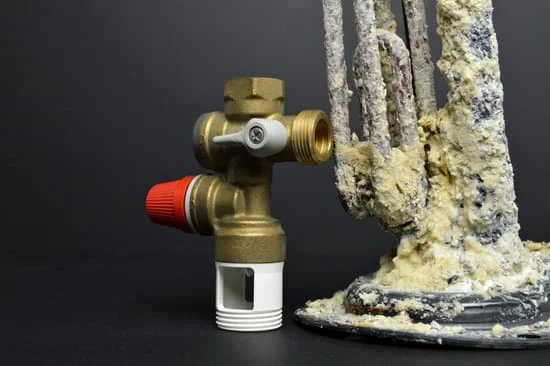
With approximately 60% of homes in the UK living in hard water areas and without some sort of water treatment device, there will be what is called limescale build up. It can be seen as chalky white deposits on taps and shower heads. What you won’t notice is the build-up within hot pipes, radiators, water heaters and boilers.
Not only does limescale reduce the lifespan of water heaters and boilers, it also increases the time to heat up your water for washing up, bathing and showering and heating up your home. This increases energy usage and therefore costs you more.
What’s more, the lifespan of water using appliances such as washing machines, dishwashers and kettles can also be reduced.
To combat these effects, new homes have to have some kind of water softening system installed. It is advisable for older homes to also fit a similar system or at least a water softening device. There are many options.
However, before thinking about how to deal with what you feel is a limescale problem, check out the water hardness in your area by contacting your water utility company.
Alternatively if you want to find out right now, just type in your postcode as prompted in the explanation about water hardness article by Kinetico Water Systems.
If you do live in a hard water supply area, you may want to read the following relevant articles about limescale, whole house water filters, water softeners and also a reasonably priced water conditioning device:
1. Removing limescale can save you money – ‘savewatersavemoney’
2. Water softening, water conditioning and more – UKWTA
3. Guide to whole house water filtration systems – Water Filter Shop
4. An alternative to an expensive water softener – Scalewatcher Water Conditioner
SECTION 3 Lighting
Up until LED light bulbs became available, most householders spent between 15 and 20% of their total energy costs on lighting.
In theory, as old inefficient light bulbs are replaced with their LED equivalents, the amount spent on such energy should naturally reduce.
In the meantime, it is a useful exercise to go through each room and note the wattage for each bulb. You may be surprised at how many old incandescent, halogen and fluorescent bulbs are still being used.
The newer energy efficient fluorescent bulbs (usually ranging from 9 to 13 Watts) may as well be kept. Any other higher wattage bulbs used for substantial periods of time should be replaced sooner than later. If replacing fluorescent bulbs, then remember to take them to your recycling centre for safe disposal – they contain hazardous substances. Incandescent, halogen and LED bulbs can be disposed of in your general household waste bin.
If you have the time and would like to compare the cost of using different energy rated bulbs you can use the sust-it lighting energy calculator
As can be seen, LED lighting is generally much cheaper to run in comparison with other bulb types.

However, in some instances where LED traditional lighting has been replaced with downlighters, the energy cost can be higher.
This is because the lighting layout of most rooms will have been altered to house more bulbs, which in turn has increased the energy use.
For example, if we take a medium size living room that has two ceiling bulbs, the traditional choice might be two x 7.5Watt bulbs (60W old style each incandescent bulb equivalent). With a new downlighter layout, you may need eight 5W downlighters (each bulb 50W equivalent).
So every time our downlighters are switched on, 40Watt of electricity is used, whilst our LED traditional set up of two LED bulbs uses 15 watts. Okay the energy and cost savings don’t amount to much, but they are still savings and it all mounts up.
In both instances, the LED setups are much cheaper than incandescent or halogen.
Many will ask why advise a set-up of eight downlighters. The main reason is that as downlighters tend to be recessed, they reflect some of their light back into their fitting and are therefore are not as bright as the same equivalent wattage ceiling light.
It’s also partly down to aesthetics; style gurus tend to reckon on so many per sized room, with a reasonable amount of space between each one.
Dimmable bulbs are also an option and can help save energy; however, you may have issues and this article by Regency Lighting explains why.
As an alternative to switching on all your lights in a particular room, it is worth considering purpose built lamps for reading, working at home or even atmospheric type lighting. Energy costs should be reduced, but accept that the environmental costs of producing the lamp in the first place may outweigh the savings.
Anything Else
When replacing lightbulbs you should be aware that there can be a big difference in the quality of LED lighting with regard to the light they throw and also the lifespan of the bulbs. It’s worth checking out the regular reviews in “Which Magazine” to find out which bulbs are recommended as a good buy.
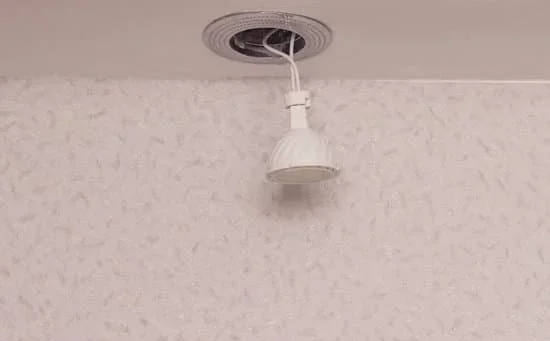
Also be aware that any lights housed within the ceiling, and even your wall, are a potential area for draughts. This is particularly so for downlighters recessed within the ceiling, and fire rated thermal covers should be considered for upstairs rooms.
One final point, try and remember to turn your lights off when they are not required.
SECTION 4 Insulation and Draughts
One way or another, any heat in your home will escape. Most of this is likely to be through your walls and roof, but substantial losses can be expected through your doors, windows and floor. Where insulation can be improved, the demand for heating will be reduced, saving both cash and energy.
We should also consider that cracks and holes also allow heat to escape and often cause imperceptible draughts, which nonetheless can make us feel colder than expected for a given temperature. Some figures suggest that draughts can be the cause of heat loss of up to 25% in a home. Chris Goodall’s blog about reducing draughts in the home is worth a read.
Grants and subsidies are often possible for draught proofing and some home insulation measures. Up-to-date information should be available from your energy supplier, local council (Salford in our case), or a reputable energy advisor.
Where to Insulate:
♦ Radiators
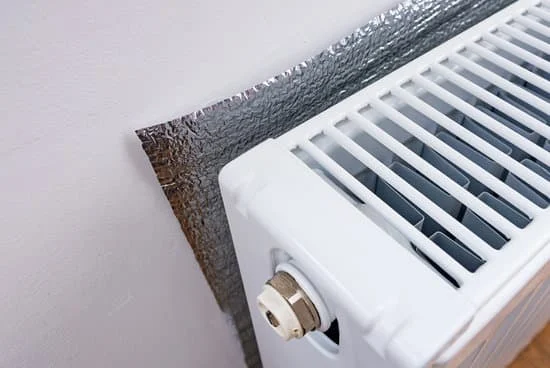
If any of your radiators are located on a wall facing the outside, do you have reflector foil to reduce heat loss?
Independent tests (undertaken on behalf of reflector foil manufacturer Radflek) have shown that by installing their reflector foil behind a radiator, energy savings from radiator heat loss through the walls is about 45%.
Payback should be less than a year for fitting reflector foil behind a radiator in your living room.
♦ Hot Water Pipes
Are pipes to and from the radiators and hot water tank (if applicable) insulated? If not these can be insulated quite cheaply and will help ensure that it is the room of your choice that is heating up, rather than it being wasted elsewhere. If accessible, ensure that pipes behind walls and below floors or above ceilings are also insulated.
Also if accessible, insulate the pipes to your bath, shower and hot water taps. You won’t have to wait so long for warm water, and this will result in both energy and water savings.
♦ Unused Chimney
If you have an unused chimney, a chimney balloon or equivalent is recommended to stop heat being wasted. Draughts will also be reduced.
Check out the manufacturer’s links below:
1. A chimney draught excluder made using Herdwick Sheep wool
2. An inflatable chimney draught excluder
♦ Windows
Secondary, Double or Triple Glazed Windows together with either insulated curtains, blinds or shutters can provide window heat loss savings from about 15 to more than 50%. Pelmets also help.
If you have single glazing, consider secondary glaze as a good budget option. DIY options are well within the scope of a competent handyperson.
Double or triple glazed windows are likely to offer increased insulation compared to secondary glazing, but the payback in energy savings can be 20 years or more. Windows and doors have different energy efficiencies and will be labelled from A++ to E (similar to appliance ratings) if they have been verified for their efficiency by the British Fenestration Ratings Council (BRFC).
Many people forget that well fitted thermal curtains, blinds and shutters also offer insulation properties. Sadly, there doesn’t appear to be an independent* energy ratings verification scheme to indicate the thermal efficiency of the various fabrics used for window furnishing.
However, there are several articles that show energy savings can definitely be made. We particularly like the Windows and Heat Loss article by Brian Clark of the Building Conservation team.
*The only rating scheme we have come across is for blinds only, and as very few retailers mention the scheme, it is likely done to a specification set up by a manufacturer. Savings of up to 15% are claimed and the Broadview Luxury Shadings Solutions article gives details of the classification scheme.
Last but not least, a Pelmet should also be considered as they can reduce the flow of warm air to behind the curtain and through the window.
♦ Lofts
It’s here that care must be taken. Not only is there danger walking between the ceiling joists, there may also be asbestos as it was often used as insulation in older properties. Asbestos can also be found under floors, cavity walls and as part of textured coatings such as some Artex ceilings. If in doubt, contact a specialist. Below is a link to one located in our area, Salford:
Northwest Asbestos Removals Ltd
Assuming that the loft is easily accessible and you have protective gear such as a facemask and overalls, there are a number of checks that can be made. These include the height of the insulation, whether it is evenly spread with no obvious gaps and that the insulation is not covering any soffit ventilation holes, as this is will hinder the breathability of your home.
The recommended height for loft insulation is 270mm and is actually a legal requirement for new builds. Retrofit builders often recommend up to 400mm, but this will come at a price with little additional energy or monetary savings. The height recommendation is based on glass or mineral fibre rolls. There is better insulation (generally more costly) out there and this could be used if you intend to make use of the loft space for storage, as you will not need the same 270mm height.
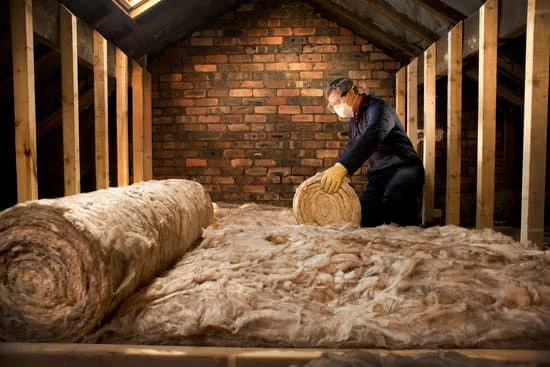
Don’t forget, the loft hatch also needs to be insulated and should be airtight when closed. Significant heat losses and condensation can occur and this is best explained in the installing airtight insulated attic hatches article by the Green Building Store Company.
A final check is to note whether any recessed downlights have thermal covers. If not, look to buy a fire rated downlight loft cone similar to that sold at Astroflame.
Draughts:
As we’ve mentioned before, draughts are often imperceptible and can be difficult to locate. Draughts are in effect uncontrolled ventilation and allow air and moisture to find its way through cracks, holes and gaps, both inside and outside the home.
In the same way that air and moisture finds its way in, heat is lost more quickly to the outside. The combination of draughts and heat loss through gaps has been estimated to be as much as 25%
An indication of possible draughts is If you feel cold after turning up the heating to somewhere between the recommended 18 to 21°C. In the colder months, draughts together with high moisture levels make you feel colder at higher temperatures in the same way that the sun shining at lower temperatures can make you feel warmer than you would expect.
To reduce draughts, we need to seal up every crack, hole and gap that we can find. Finding the source of the draughts can be difficult, but using a smoke stick or even a candle may help.
There are certain areas in the home where draughts are more likely to occur and these are detailed below:
♦ Plumbing Gaps
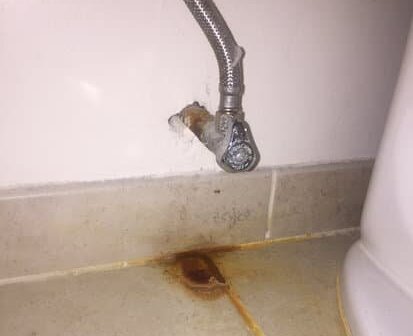
Wherever there is any plumbing involved, there may be some kind of gap between the pipes and wall. Besides causing draughts, gaps can also make it easier for fires to spread and are a potential source for pests.
It therefore makes sense to seal these gaps, so if you can, check under your bath and behind the toilet. The kitchen is usually the other main area for plumbing gaps. If the gaps are large, roughly shape out a solid board (preferably insulated) and finish off with fireproof sealant.
♦ Window Frames
Check that your window frames are sealed properly. Old single glazed windows and sash windows can be a particular problem. ‘How to seal’ tutorials are shown on many websites, but the type of seal required will depend on the gap and type of window.
♦ Floorboards
Up to 15% of your heating can be lost through the floor, so sealing any gaps in floorboards will help. For those with patience and time on your hands, you can try inserting wood slivers as available from Period Projects.
If that method seems time consuming then the floorboard gap filler by Draughtex might be the answer. Another recommended product can be seen here:
Don’t forget that your floorboards will run under your skirting board and there may well be cracks between the skirting boards and the wall. Using decorators caulk seems like it will do the job and Nemesis Mighty Decorators Caulk gets lots of thumbs up from the trade.
If you intend to carry out a major refurbishment of your home, then insulation under the floorboards or rigid insulation for solid floors would be the best way of reducing heat loss through the floor. This is usually not a job that you can carry out without professional help.
♦ Doors
Old doors or badly fitted doors are often a source of draughts. A joiner will be required for those of us without good DIY skills, but for simple draught proofing there are many types that fit underneath and around doors, letter boxes and even keyholes.
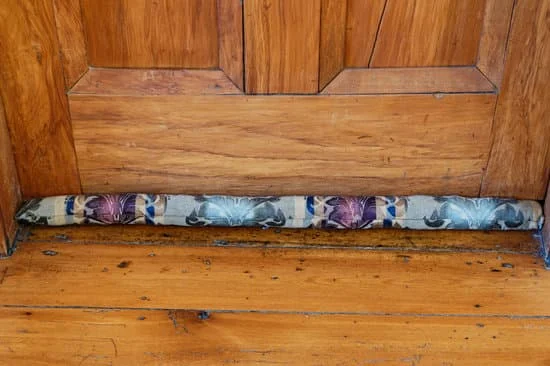
For additional insulation, consider a curtain for your door. This can be attached to a traditional portiere.
♦ Light Switch Fittings, Recessed Lighting etc
Light switch fittings, recessed lighting, plug sockets and phones are all areas where draughts are possible. Working near electrics has safety implications and so it is advisable to employ a professional with electrical qualifications. If, however, you are confident that you can carry out the draught sealing yourself, then check out the ‘how to do’ articles and a fire rated foam sealer:
1. How to insulate electrical points with gaps – The Spruce Website
2. How to insulate around recessed lights – Real Gospodar Website
3. A 5 hour rated foam sealer – Geocel Company
SECTION 5 Water Management
When looking at our impact on the environment and also saving money, water management is often overlooked. In many regions it is a scare resource and the management of water is increasingly a cause for concern in areas where floods are becoming more common and our native wildlife is struggling to survive.
Before water reaches our homes it has been pumped through many pipes and processed at a treatment plant to make it safe to drink. Our wastewater also has to be treated before being discharged into the rivers and sea, and this whole process is quite energy intensive with the result that the average family creates 1.5 tonnes of water related greenhouse gases each year
To reflect the cost of having clean water and its treatment thereafter, we pay for this through our water bill.
Many homes have metered bills and so this is calculated on exactly what we use whilst taking into account wastewater and sewerage costs. It is usually cheaper for single people, couples, and sometimes small families to be on the metered billing system, but perhaps not for families or high water users.
For those of us that receive unmetered bills it is possible to have a meter installed, and using a calculator found on your water utilities website, you can work out if this will save you money.
Whether our water is metered or unmetered, and to help protect the environment, we should all try to cut down on what we use.
We also need to know that when we use water, it is often heated and therefore by learning how to use our water wisely we can reduce our energy bill. Examples include washing dishes or clothes, taking showers or baths, and of course having a cup of tea or coffee.
So now we have decided to reduce our water usage, the next step is to work out how. A good start is to look in the rooms where water has the biggest footprint.
The Kitchen:
♦ Kitchen Sink Taps
First of all, check your kitchen tap. Older taps flow at about 10 litres per minute, whilst a modern tap will flow at about 6 litres per minute. Easy to fit 5 litre per minute tap aerators are often available at no or little charge from your water utility company.
♦ Washing Machine and Dishwasher
As most of us are aware, the most efficient way to use a washing machine or dishwasher is to ensure it is full before using it. Low temperature washing with an appropriate detergent can often be used for lightly or normally soiled laundry and will save additional energy and money.
If you have to buy a new washing machine or dishwasher, choose an energy efficient reliable model with as low water consumption as possible. Energy labels displayed on the appliance should provide most of this information. Online reviews are often useful (be careful of false reviews) for checking out reliability issues. ‘Which’ magazine, also carries out independent research on many products, whilst also having an online presence.
It also pays to be mindful that each washing cycle uses varying amounts of energy and water consumption. For example, one washing machine guide book we read through, informed us that a 2kg ‘delicate’ wash consumed 0.38kwh of energy and used 69 litres of water, whilst a 2kg ‘woollen’ wash consumed 0.23kwh of energy and used 39 litres of water.
So if we have the confidence to experiment and wash more of our ‘delicates’ in the wool wash, then over time we will save money and energy. In addition, it has been found that a ‘delicate’ wash releases more plastic compared to wash cycles that use less water. It also has to be said that laundry detergents vary in their effectiveness for different temperature washes. Sometimes it’s difficult to know what to do.
For information on research that has gone into washing machine cycles and plastic fibres, check out the Guardian Newspaper article.
♦ Pots, Pans and Kettles
More water and energy can be saved by not overfilling pots and pans when cooking, whilst overfilling kettles can add an extra 3.2% to our electric bills.

If you only need a cuppa, don’t overfill your kettle
If you do overfill your kettle, then use the excess water to either wash the odd bits of cutlery or crockery lying about or perhaps clean your worktop and cooker.
Excess water from pots and pans can be saved as stock for future meals or making gravy.
Bathroom:
♦ Electric Shower
By cutting down on how long is spent in the shower, many householders will not only reduce their water usage, but also make substantial savings on their electric bill. Householders with a water meter will save even more.
Electric showers tend to be powered from 7.5kw to 10.5kw. As an example, we’ll compare the running costs of a 7.5kw and 10.5kw powered shower over different time periods:
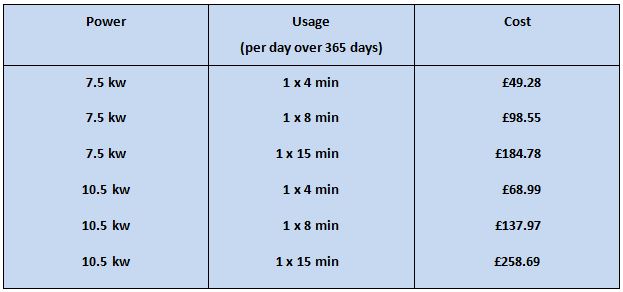
The calculation is based on the revised Ofgem energy priced capped tariff of 27p per KWh that came into effect on the 1st October 2023. The capped tariff set by Ofgem assumes that you pay by Direct Debit and that you are on a standard variable tariff.
If you are not on a standard variable tariff (Fixed or Economy 7 for example) and/or paying on receipt of a bill and/or on a prepayment meter, the energy capped tariff will be different.
Use the sust-it energy calculator to work out a more accurate cost of your shower.
Note 1: 1000 watts = 1 kilowatt
Note 2: The average person in the UK spends about 8 minutes in the shower
♦ Shower Head Flow Rates and Shower Times
No matter what type of shower you have, if you are on a water meter, your water utility bill will be affected. As an example, we’ll compare how different shower head flow rates and time spent in the shower increase the annual costs to your water utility bill:
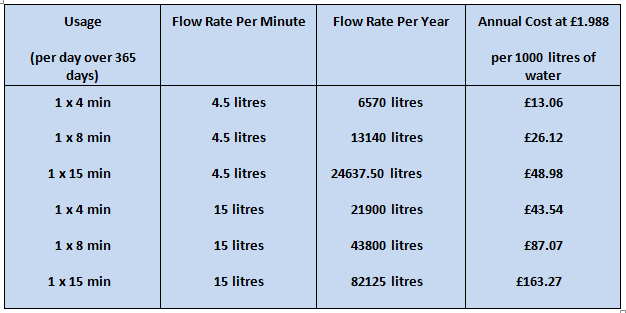
The cost calculation is based on having a water meter and being supplied by United Utilities. Household charges for the year 2023-2024 currently stand at £1.988 per 1000 litres of water.
Note: Shower Water Flow rates tend to vary from 4.5 litres per minute to 15 litres per minute.
As you can see from the examples given above, a household with a power shower and water meter could end up spending a small fortune. It may even be cheaper to run a bath!
Therefore the principle of spending as little time as possible in the shower and using eco modes will help save energy and cash no matter what type of shower you have.
♦ Bath
The average person (in the UK) fills a bath with 80 litres of water. On the assumption that one person has one bath each day, then over a year that equates to 29200 litres. With a Water Meter cost of £1.988 per 1000 litres, the total cost would be £58.05 per year!
There’s also the cost to heating the water for your bath. This will vary tremendously and depends on how your water is heated. For example, does the water come from a gas combi boiler or an electric immersion heater?
If it comes from an immersion heater, what is the size, how long is it on for and if your tariff includes a cheaper economy 7 tariff is the water heating up during the cheaper period?
However you heat your water, the cost of a full bath each day for a year is likely to range from a £100 to a few hundred pounds.
You can see how savings can easily be made by just having a shallow bath or as an alternative, consider the addition of a simple bath tap shower attachment.
♦ Bathroom Sink Taps
As with kitchen taps it’s possible that the flow rate of an older tap will be high and around the 10 litres per minute mark, whilst modern taps will flow at about 4 to 8 litres per minute. Easy-to-fit 5 litres per minute tap aerators are often available at little or no cost from your water utility company.
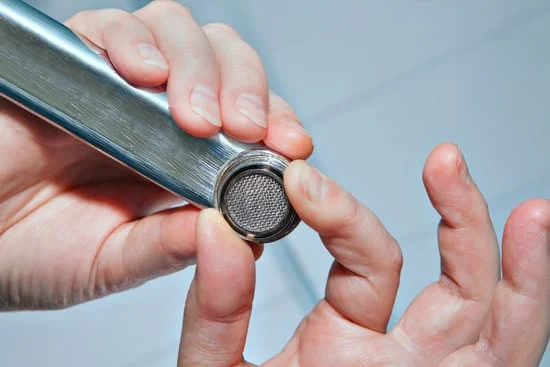
If you want to measure the flow rates of your taps or shower heads, then a cheap option is to buy what’s called a Flow Bag.
The flow rate can be calculated for free if you have a measuring jug and stop watch.
♦ Toilet
Older toilets flush away up to about 12 litres of water. Modern water saving dual flush ones range from 2.5 to 5 litres and 3 to 6 litres, which shows the potential for savings.
Although dual flush toilets are great for saving water, you need to be on the lookout for leaks due to poorly designed valves and lime scale or grit interfering with the flushing mechanism. Before making a purchase it would be wise to read as many reviews as possible, paying particular regard to checking long term reliability.
The non-profit water efficiency organisation ‘Waterwise’ has an excellent downloadable tip sheet that will benefit anyone considering buying a dual flush toilet. It also gives an explanation on the most common failings of dual flush toilets and this may be useful in working out where a leak has originated from.
If you still have one of the older toilet cisterns with the front mounted levers, you may be able to install a device that should substantially reduce the water used when flushing the toilet. At the time of updating this guide, the two products (variflush and interflush) that were originally used to highlight as being worth checking out are not currently available. No doubt they will return in some other form and it’s worth checking the internet for other alternatives.
In the meanwhile, a ‘Save a Flush’ type device that sits in the older type cisterns may save a little water. These products and other water saving products are often free from your local water utilities company. The water for our area (Salford) is supplied by United Utilities, and it’s worth contacting them to find out what free products and special offers are currently available.
Anything Else
About 60% of homes in the UK live in hard water areas and this causes what is called limescale build up. The base of your kettle will look a little furry, whilst chalky white deposits will be seen on taps or shower heads. Many people are unaware that limescale also reduces the efficiency and lifespan of appliances and boilers. Your energy usage will increase and so will your bill.
To combat these effects, new homes have to have some kind of water softening system or conditioning device installed. It is advisable for older homes to also fit something similar. There are many options.
If you do live in a hard water supply area, you may want to read the following relevant articles about limescale, whole house water filters, water softeners and also a reasonably priced water conditioning device:
1. Removing limescale can save you money – ‘savewatersavemoney’
2. Water softening, water conditioning and more – UKWTA
3. Guide to whole house water filtration systems – Water Filter Shop
4. An alternative to an expensive water softener – Scalewatcher Water Conditioner
SECTION 6 Air Quality and Ventilation
If we’re ever asked as to what makes a comfy home, our first thoughts are that it should be warm in winter and cool in summer. We want it to nice and clean, light and airy and probably located somewhere with a bit of peace and quiet. Our thoughts don’t tend to include air quality and the possible effect on our lives.
It’s not something that we actively measure. We may wonder why we often wake up coughing and sneezing after a night’s sleep, but we probably aren’t too concerned. Any signs of mould are just accepted and met with a quick clean, headaches are solved with tablets and tiredness is put down to modern day life.
No link is made to the possibility that the air quality may be partially to blame. We’re also unlikely to know or ignore the fact that there is often a connection between the physical condition of our home, the quality of air and our general health. Sorting out the air quality will go a long way to improving our short and long term health. It will also improve our comfort levels and help reduce the energy and maintenance costs of our home.
Unless we can afford to hire someone to carry out a home air quality survey, we will need to make some assumptions. Visual and sensory signs can be used as indicators of possible poor air quality. Other signs are often invisible or require use of monitors. Carry out your own mini audit using the basic information below.

Part 1 – Air Quality Indicators
♦ Uncontrolled Ventilation
By just opening and closing windows to manage draughts and comfort levels, then you have in effect uncontrolled ventilation.
In the warmer summer months with sufficient air movement this may be acceptable, as excess moisture, dust, odours and toxins are likely to be reduced and any draughts may provide a cooling effect. There will however be an increase in the pollen levels and this can cause problems for many people. And even disregarding the pollen, there is no guarantee of the purity of incoming air.
In the cooler damp months, warm inside air will be replaced by colder air and the high humidity is likely to cause problems. We can increase the temperature to reduce the relative humidity, but we’re wasting money and energy if any windows are still left open.
We should also be mindful that dust and toxins are produced all the time; a lot of which will originate from the outside, whether it is through the windows or attached to our shoes, clothes and even our shopping.
Poor air circulation also has an effect and some rooms may still hold too much moisture, even if the rest of the house is dry. Mould only needs a few days to grow and take hold.
In a nutshell the ability to control ventilation will make it easier to improve our air quality.
♦ Humidity
Humidity is the amount of moisture in the air. The higher the temperature, the more it can hold.
Too much or too little moisture can affect our health, and damage not only household possessions but also the fabric of the building. The problem is that we can’t see it and this makes it unlikely we will do anything about it until we notice something like mould or damp patches.
It therefore helps to measure the humidity in our home. To do this, we use an inexpensive instrument called a hygrometer or humidity meter. It measures what is called the relative humidity (RH) and the readings can inform us of the potential harm to our health and the likelihood of damage to our possessions and home.
If there was no moisture, the meter would read 0% Relative Humidity (RH) whilst a 100% RH reading would tell us that the air is completely saturated with water. If this saturated air were to come into contact with a cooler surface (such as a window), condensation would occur.
Ideally, you want your home to have about 50% RH but anything between 40 and 60% RH is fine.
Low Relative Humidity (below 40%) is rare in the UK but can be seen in some homes where the central heating is set too high. Symptoms include a dry throat and nose; itchiness and dehydration.
Unfortunately, partly because of our lifestyle (cooking, taking baths, showers and drying clothes) and the UK’s damp climate, many homes will have a high relative humidity (above 60%). In summer, it can make you feel warmer than it is, while the opposite holds true for winter.
Why do we sometimes feel hotter or colder than what the thermostat says it is?
Often, many of us report that a temperature of, for example, 18 °C in winter feels colder than the same temperature in summer. One reason is that in winter we don’t feel the full benefit of radiant heat from the sun.
In summer, the sun shines for longer, is warmer for longer and gradually heats the whole mass of our home, including the contents. Long after sunset we will continue to feel warm from the heat that radiates (radiant heat) out from the walls, floors, ceiling and everything else. For example, the thermometer might tell us that the temperature is 18°C at midnight but we feel warmer. This is because the thermostat can measure air temperature but not radiant heat.
In winter, we don’t have much radiant heat. Walls and floors, etc., are likely to be cool or cold and will, in fact, be drawing heat from our bodies. There may also be imperceptible cold draughts contributing to a cooling effect. The thermostat reading may again show 18°C at midnight but we will definitely feel colder.
To better understand the effect of radiated heat, go outside on a cold windless sunny day. Out in the open, with the sun shining on us, we can feel quite warm. As soon as we step into the shade or the sun goes in we feel as though the temperature has suddenly dropped. It is the sun’s infrared rays that have warmed us up, rather than the air.
When the RH is above 60%, and in particular over 70%, dust mites and mould spores thrive whilst toxin (Volatile Organic Compounds) emissions tend to increase with a higher RH.
Homes with prolonged periods of high RH pose a health risk to residents and even more so for anyone with existing health problems such as asthma.
We mentioned earlier that too much moisture can damage our household possessions and fabric of the building. To understand why, you just need to keep in mind that moisture will always move to a dryer area. Anything that can absorb moisture is susceptible. Examples include books, clothes, furniture, wallpaper and plaster. This may prove costly in the long term.
All the issues mentioned above will be reduced if we take steps to reduce the relative humidity. How to reduce moisture and relative humidity will be discussed a bit later on.
♦ Condensation
Condensation briefly mentioned above is attributable to high RH and is easily noticeable on windows but not so much on anything else.
As an example, think about when you wake up on a cold morning and notice condensation on your bedroom window. This is probably due to the fact that, during the night, the RH will have increased to the point where the air in your bedroom is nearing saturation point (RH 100%). The increased moisture and therefore higher RH has been caused primarily by your perspiration and breathing during sleep.
As we know, a higher temperature will hold more moisture than a lower temperature. The temperature of your window will naturally be colder than the average temperature of your bedroom. This means that the colder air next to and touching the window will not be able hold as much moisture as the warmer air elsewhere in the bedroom.
The temperature of the colder surface (your window) will determine whether condensation will occur. This temperature is called the dew point. In our example, the window was cold enough that as soon as the warmer air from your bedroom touched the surface of the window, it condensed into water.
Everyday activities such as taking baths & showers; cooking, drying laundry and even basic exercise will likewise produce moisture that can lead to condensation. This often goes unnoticed as it can be quickly absorbed into its surroundings such as external walls.
It is possible to predict when condensation is likely to appear or already present by using a moderately-priced thermal condensation scanner. Features may include a dew point reading that tells you at what temperature the air moisture will turn into water whilst a laser pointer will measure the temperature of any section of the wall you wish to check out. A wall temperature reading close to the dew point reading suggests a risk of condensation.
Condensation occurring regularly is something that you should be concerned with as the chances of damp taking hold are increased. Damp goes often undetected and your first warning of a problem may be a musty odour, wallpaper stains or traces of mould.

♦ Temperature
Probably most of us don’t fully understand the role that temperature plays in our home’s air quality.
In the Humidity and Condensation sections, we learnt about the relationship between moisture and temperature. We know, for example, that during the cooler months, the air cannot hold as much moisture compared to warmer days and the effect of this may be seen as condensation on walls, ceilings or windows.
If no preventative action is taken, mould and damp patches are likely to occur over the medium to long term. As you may already know, mould and the spores produced from mould, may be harmful to some people.
Naturally enough, when our home feels cold and damp, we will switch on the central heating. The higher temperature will lower the relative humidity and reduce the chances of damp and mould taking hold of our home.
If, however, our central heating is left on at a high temperature for long periods, the air can become too dry; and for anyone with respiratory problems, these can be worsened and you may lose the body’s natural protection from bacteria and viruses. As mentioned in the humidity section, symptoms of dry air (low relative humidity) include a dry throat and nose, itchiness and dehydration.
Whilst these symptoms may not seem like a serious cause for alarm, with time, exposure to low humidity levels may dry and inflame the mucus membrane lining inside your respiratory tract. As a consequence, your body becomes more vulnerable to catching colds, flu, and other infections. Dry air also aids the survival of harmful viruses.
In the summer months, a combination of warm temperatures and high relative humidity will likely increase the rate of VOC (chemical) emissions that are emitted from almost every item in the home. This will include wooden furniture, textiles, paints and plastic items. As with mould toxins and spores, VOCs are detrimental to many people’s health. Good ventilation will help.
Working out the effect of different temperatures on air quality within the home can be difficult. This means that we also have to take into account other air quality indicators; only then will we be able to come up with solutions that help us live in a more healthy and comfortable home.
♦ Mould
Moulds produce toxins that in some people can cause allergic reactions (particularly from mould spores), respiratory problems and even internal damage to your kidney and liver for example. Similar damage can also result from bacteria and viruses found in homes with high humidity and damp conditions.
Aside from damaging your health, you should be aware that if no action is taken to get rid of the mould, the fabric and even building materials within your home will deteriorate. The repair costs may prove expensive in the long run.
By controlling the amount of moisture and relative humidity, you can make your home a healthier and more comfortable place to live in. You will also find that maintenance and energy costs are reduced.
♦ Damp
Damp is an indicator that condensation, moisture, or water is present in your home. If it doesn’t dry out within a short period of time, structural damage is possible and your health could be at risk.
Aside from the everyday activities mentioned elsewhere in this section, there are many reasons why damp may be present within your home. Often it is a combination of factors that are causing the damp.
To help you identify the factors that may lead to damp, the examples below are those that we have come across following our home visits and also in our research before writing this section:
- Inadequate ventilation within the house and/or the cellar/the sub floor
- Existing ventilation insufficient after taking Insulation and/or draught proofing measures
- Non breathable renders, plaster, paint and wall paper
- Garden/adjoining properties on higher level than your home
- Leaky gutters and drainpipes
- Inappropriate or wrong type of pointing
- Extractor fans/trickle vents/air bricks – not serviced, blocked, closed
- Vegetation growing next to or near one of the walls
- Unvented closed off chimneys
- Furniture too close to walls creating stagnant air conditions leading to localised damp areas
- Moisture produced from burning gas fires and cookers
- Incorrect cabling for satellite dishes etc. has allowed rain water ingress
- Cavity wall problems – insulation & cavity wall ties defects
- Damp Proof Course failure
- House alterations both inside and out your own property and even work carried out by adjoining neighbours property may have some unforeseen detrimental affect
- Damp Bridging
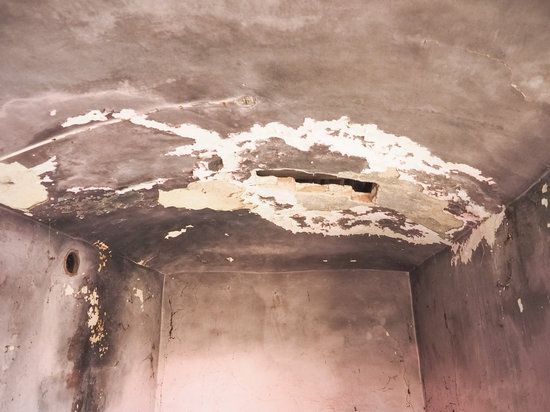
As you are probably aware, diagnosing the cause of damp is very tricky and unless you are prepared to do lots of research, it’s perhaps best left to experts.
If you think that you have damp issues, then before calling anybody out, read as many damp articles as you can.
To start you off, our recommendation is to check out an article on the different approaches to detect damp and also to this forum contribution by David Aldred a specialist in damp related issues. We also like the knowledge shared in the series of damp related blogs and videos by ‘Complete Preservation’.
If you can find the source of the damp, then great, you may be able to get rid of it with perhaps a few behavioural changes and some minimal cost improvements.
If, however, after making any changes, damp persists, then you will probably require the help of an independent damp specialist.
A list of local practitioners can be found through the Property Care Association (PCA). You can also contact them by telephone on 0844 375 4301. Ask for an independent consultant specialising in damp. Minimum qualifications are CSRT (certified surveyor in remedial treatments) and CSSW (certified surveyor in structural waterproofing).
Alternatively the Royal Institute of Chartered Surveyors (MRICS minimum qualification) also have members that specialise in damp related problems. A practitioner is probably best found by doing an internet search or by contacting the organisation directly.
Note that a certain amount of liability protection is secured when using the services of members of the Property Care Association or Royal Institute of Chartered Surveyors. This is particularly useful as a failed remedy may prove to be expensive to rectify.
♦ Drying Clothes and other fabrics indoors
There are two main reasons why drying clothes, towels and bedding indoors can affect air quality. The first was mentioned above, where we talked about the potential of excess moisture to cause damp and mould and increase the likelihood of toxins being released.
The second is that most washing powders and detergents contain chemicals that are gradually released into your room as your washing dries. So that lovely natural scent you can smell as your laundry dries is likely to affect those with sensitive skin and anyone with an underdeveloped or weakened respiratory system.
There are however, many eco-friendly products that are better for us and also the environment. An understanding of the various environmental labels found on product packaging is useful before making a purchase. As a starting point, the ethics guide from the ethicalsuperstore company explains the various types of labels that may influence what you decide to purchase.
Note: Although a clear explanation is given as to what each label means, it’s as well to recognise that some labels are one’s designated by the store itself and won’t necessarily be shown on the product you wish to purchase.
♦ Ailments including Coughs, Sneezes, and Allergies
Everyone is susceptible to some kind of ailment, but our concern is whether the trigger has originated from within the home.
Our first step is to note down the symptoms such as coughing, sneezing, tiredness, itching, etc. We then need to note when, where and how often the symptoms occur; for example, is it always in the same room or all rooms. Above all, once we leave the home do the symptoms disappear?
Can you think of reasons that may cause the symptoms? For example, have we just vacuumed, hung up clothes to dry or recently cleaned the bathroom?
If we can work out the reason, then we can do something about it. For example, we can buy pillow cases that protect against dust mite allergens or buy cleaning products formulated for sensitive skin.
If the symptoms persist and we are unable to find the cause, then contacting the doctor for treatment and also asking for an allergy test may be worthwhile.
♦ Odours
Odours are one of the easiest ways of letting us know that air quality has been compromised. Smoke from say burnt food is easily understood to be bad for our health and we either rely on an extractor fan or open windows and doors to reduce the effect. Musty smells can be a sign of damp or mould, although the effect to our health is often not understood and action is not always taken.
For ‘fragrant’ scents such as those given off from perfume, air fresheners, washed laundry and personal grooming products, the health risks are usually ignored or are seen to be an acceptable risk for the benefits the scents provide.
We rarely consider the health risks, unless they trigger off some kind of reaction to us personally.
At the very least, we should try to understand the health impacts from the products we use and consider alternatives if available.
♦ Dust
Dust is all around us, but is more likely to be found inside the home rather than outside. Household dust includes a mixture of dirt from outside, pollen, hair, dead skin cells, dust mites and their faeces, fibres from food, paper and textiles. Spores and other toxins will also bind themselves to the dust particles.
As you might expect, dust with all its components can be harmful to health and we should take measures to reduce the effects. Dust or particulate monitors are available, but the more accurate and reliable ones are costly.
The heavier settled dust is easy to spot, and this is quickly dealt with by vacuuming or wiping off with a damp cloth.
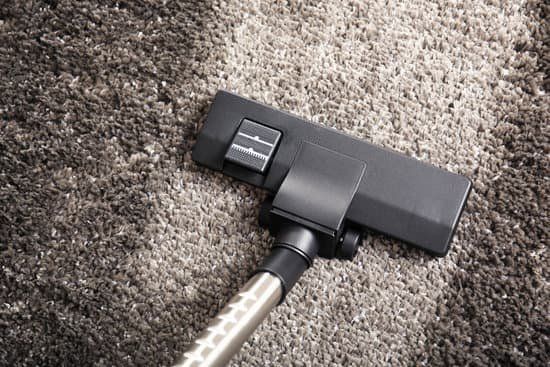
Airborne dust particles are difficult to deal with, but there are options and we’ll review those later on.
♦ Household cleaning products, furnishings and everything else
Unfortunately, we have to accept the fact that every item in our home has the potential to harbour toxins.
This is understandable as after being manufactured, the finished product may include glues, solvents, resins, coatings, varnishes and all manner of chemicals. Under certain conditions we can become exposed to these chemicals, which can be toxic in even small doses for many vulnerable people.
Toxins have already been mentioned many times in this guide and probably now is a good time to give a little more information. Other common terms or words mentioned when discussing air quality include chemicals, poisons, pollutants, Volatile Organic Compounds (VOC’s), and Particulate Matter (PM or Particulates).
Volatile Organic Compounds (VOCs for short) is perhaps the most commonly used term and stands for a group of chemicals that can evaporate at room temperature. They are found in every home and are inhaled, ingested or absorbed through the skin. They may be natural or synthetic and are released over both short and long periods of time.
Many VOCs are toxic (particularly in the long term) and can contribute to causing asthma, allergies and many other health problems. They are in fact an invisible indicator of poor air quality.
Particulate Matter is the other main term used when discussing air quality and refers to airborne substances that include pollen, fungal spores, dust mites, bacteria, viruses, liquid droplets, fibres and much more. As with VOCs they can be inhaled or ingested, are present in every home and can cause health problems to virtually everyone.
We should also mention Dermal Absorption, a lesser known term that is used to describe chemicals or toxins that can be absorbed through your skin. Examples include personal care products and to a lesser extent carpets and other furnishings. So although Dermal Absorption is not directly related to air quality, it is something to bear in mind when considering your health.
Though it’s impossible to avoid all toxins, poisons, pollutants, VOC’s, Particulate Matter or whatever else they are called, there are many actions you can take to limit your exposure and in turn improve your health.
Taking into account all the air quality indicators mentioned in the above sections, we can now look at solutions to increase the air quality in our homes. These are discussed below.
Solutions to better Air Quality and better Health:
♦ Ventilation and Moisture Control
Good ventilation is probably the best and cheapest way to ensure a healthy you and a healthy home.
We’ve already mentioned that by just opening and closing windows we cannot guarantee (in the long term) the quality of air in our home. A properly designed ventilation system is much better and is important if you have already carried out improvements to make your home more airtight.
However, it’s difficult to recommend any one ventilation system over another as the options are dependent on various factors such as your budget, how air tight your home already is and also what kind of lifestyle you live.
For anyone on a budget, a decentralised ventilation system may be the answer, whilst whole house ventilation is something to consider if you can afford it.
♦ Decentralised Home Ventilation
From recent surveys we have seen on standard 2 or 3 bedroom homes, the most popular advice for anyone on a budget seems to be that continuous running humidity controlled extractor fans should be installed in the kitchen and bathroom, whilst humidity controlled wall vents or trickle vents to windows should be installed in other rooms.
The extractor fans in your bathroom and kitchen will draw in stale air, moisture, dust and toxins from each area of your home and this will be moved to the outside. Fresh filtered air (dependent on the quality of filter) will be drawn in through the trickle/ wall vents and assuming maximum cross flow ventilation, this will circulate throughout your home.
Remember though, that dust and grime will gradually build up within any extractor fan. To keep a fan working efficiently, you will want to ensure there is easy access for cleaning and servicing.
Energy ratings, humidity settings, reliability and how quiet* the fans are should also be a factor in deciding which ones to buy. Check reviews to get an idea of how reliable and effective any unit is.
If the ventilation in your home is working as it should, relative humidity will probably read between 50 and 60% throughout the property.
*It is known that some residents block off extractor fan units because of the noise. This defeats the object of the fan and will increase the likelihood of mould and subsequent health problems.
Sometimes trickle/passive wall vents and extractor fans are not always good enough to provide the fresh clean filtered air that you need. This may be due to underpowered extractor fans or the size and layout of the rooms restricting the cross flow ventilation.
Additionally curtains, shutters and the air tightness of internal doors may have an effect on the cross flow ventilation.
Carbon Dioxide (CO2) monitors are a relatively cheap way of identifying the quality of air in a particular room.
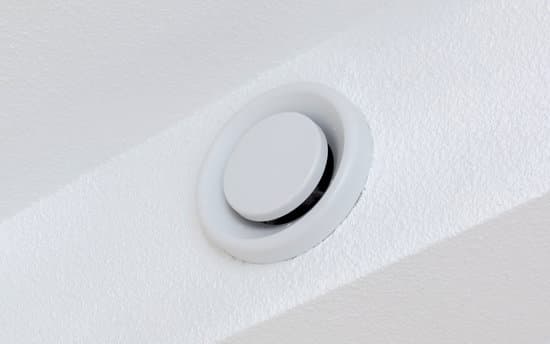
♦ Whole House Ventilation
Whole house ventilation may be more suitable, particularly if you have made (or intend to make) your home air tight. There are different solutions for whole house ventilation systems, and some can be expensive to purchase.
To design and fit such a system requires expert knowledge, but the benefits should include moisture control (ensuring that there is no damp or mould), better airflow throughout your home and more changes of fresh filtered air during any given period. This should lead to improved air quality and may also save money in the long term.
Whatever type of ventilation that you wish to consider, our recommendation is to seek out the services of a recommended ventilation expert, who will advise you of your best options. If you cannot find the advice locally but have an idea of the kind of ventilation that may be suitable for your home, then contact the manufacturer for advice.
♦ Ventilation – A Few Thoughts
The sooner you are able to install a decent ventilation system, then the sooner you will reap the benefits of better air quality. The lower humidity levels in your home will make it much more difficult for dust mites to breed and moulds to form. Particulates and toxin emissions will reduce, condensation will disappear and damp areas should dry out.
A more healthy you and a healthy home will be the result. You should also save on your energy bills, as evidence shows that residents feel warmer in homes with lower humidity and are less tempted to turn up the thermostat. As most people are aware, lowering your thermostat by just 1 degree will save energy and can knock up to 10% off your home heating bill.
However, it must be noted that ventilation isn’t the answer to everything. It takes time for any ventilation system to replace existing air with new fresh filtered air. In the meantime you will for at least a short time, be exposed to dust and toxins, etc. For example, even after cleaning your home, chemicals from furniture polishes, floor cleaners and sanitizers will still be around for a while.
So although good ventilation is always recommended, there are, as we shall see, other ways to improve our home air quality.
Note: If there are still signs of damp after a good ventilation system has been installed, then other factors are probably responsible. This is where you may need the help of an independent damp specialist who is experienced in dealing with damp related properties.
♦ Behavioural Changes
By making just a few behavioural changes, we will minimise the moisture circulating throughout our home. Examples include putting lids on pans when cooking, reducing shower times, making sure that tumble driers vent outside and drying clothes outside rather than in the home.
Behavioural changes such as the above will ensure that no matter what type of ventilation system you have, it won’t have to work so hard to reduce the moisture. Energy is saved, maintenance costs are reduced, and you will save money.
♦ Advice for buying household cleaning products, furnishings and everything else
Now that we know that most products emit some kind of toxic chemicals, then when we make a purchase it makes sense to look for less harmful alternatives. We’ve already touched upon the need to look at labels when buying washing powders and detergents.
The same advice applies to most cleaning products. Where available, buy plant based substitutes as they are usually the better option compared with synthetic or petrochemical based products.
You should be concerned if a label mentions danger or caution and recommends protection for hands and eyes or other parts of the body.
Note, however, that even natural and organic products may still cause a reaction to some people.
When we look at furniture such as mdf and plywood, we find that these are usually manufactured using toxic resins and glues, whilst even solid wood furniture may contain toxins from waxes, sealants, paint or other treatments.
Toxin free soft furnishings can also prove difficult to purchase, as often they are required to include fire retardant treatments, whilst bedding for example may include chemical treatments to make them stain or crease resistant.
Note: The ‘ethical consumer’ magazine’s shopping for furniture guide is our recommended read if considering a furniture related purchase.
Assuming that you can’t afford to replace everything at once, it might be an idea to make some kind of priority list. How to make a list is difficult and can depend on your situation. Consider a list based on the following:
• Room by room basis. Perhaps start off with the rooms you use the most. If for example, it’s the bedroom, your possible purchases may include natural and organic personal care products and bedding with protection against dust mites. For redecorating you could choose paints with low or totally free VOCs.
• Buy Second hand. As brand new items are likely to emit the most toxins, consider the purchase of used items where appropriate. Not only will there be fewer toxins, your carbon footprint will be reduced. The only possible environmental costs will be the transport of your purchases, the disposal of the packaging, and if applicable the cost of disposing of the product you have just replaced.
• Allergies. If you ever have regular symptoms such as feeling tired, headaches, itchiness or just feeling unwell, then don’t rule out the possibility that the cause as being something in the house. For example, many people find that laundry powders cause allergic reactions.
An allergy test and its subsequent results may be useful in identifying what in your home is causing the allergy. You will then be able to replace the relevant products or items as and when your circumstances dictate.
Note: Even with your priority list, you will probably find it difficult to alter your shopping habits. On the plus side many everyday items can be bought at not too much extra cost compared to your usual shop. Changes are probably best done gradually and perhaps as and when savings have been made elsewhere.
The biggest difficulty is how to source and substitute products you like, with ones that are less likely to contain and emit toxins, and are kinder to you and the environment.
Despite the challenges, it’s worth making the effort.
♦ Vacuum Cleaners, Dehumidifiers and Air Purifiers
Assuming that you have taken on board the advice given above, the air quality in your home will gradually improve. However dust is pretty much unavoidable and you will still possess some potentially harmful products. Some areas of damp may also persist.
Vacuum Cleaners
Regular vacuum cleaning and dusting with a damp cloth will help reduce the dust. When it’s time to replace your vacuum cleaner, look to purchase one that includes a true Hepa filter, as others are unlikely to be as efficient. Reliability and the energy rating should also be a consideration and take note that higher powered cleaners don’t always pick up the most dust.
‘Which’ magazine has useful reviews, but there is a £5 charge for a trial subscription. This will need to be cancelled before a month is up, otherwise you will end up being enrolled for a full year!
Dehumidifiers
Dehumidifiers are often recommended for damp homes, but if you have had the right ventilation system installed, there should be little requirement for a dehumidifier.
Over medium to long periods they can be quite expensive to run, but are still useful in situations where areas of your home need to dry out quickly. For example, if a leaking water pipe or immersion heater has caused extensive damage to your home.
Some people also use dehumidifiers to speed up the drying of their laundry. Just be aware that this is likely to be more expensive than drying your laundry in a well ventilated heated room.
For homes without decent ventilation and during colder periods, a dehumidifier can be an energy efficient way to dry laundry and it will also raise the temperature of the room that it is housed in. From experience a desiccant dehumidifier in cool or cold temperatures will dry clothes faster in comparison to a refrigerant dehumidifier. It gives out more heat and you may find that you are better able to delay putting your heating on. It does cost a little more to run though.
Best of all is the opportunity on a sunny day to dry your washing outside. There is no energy cost and the ultraviolet rays from the sun act as a free sanitiser to kill any germs that may remain from the washing of your laundry. And of course drying outside the home rather than within should reduce the amount of toxins that you breathe in.
Air Purifiers and Plants
Air Purifiers: If you wish to go one stage further, an air purifier is something to consider. Generally this is a device with one or more filters designed to improve the quality of air within a confined space. Each filter has a different purpose. For example, a HEPA filter will remove most particulates, whilst an activated Carbon filter will absorb toxins or VOCs (volatile organic compounds) as they are often called. The best air purifiers will reduce or remove dust, smoke, bacteria, viruses, mould spores, pollen and all manner of toxins.
As air purifiers and replacement filters can be expensive, you need to be pretty sure that you choose the model most suitable for your needs.
Check reviews and read as many articles as you find. In particular check the pros and cons of the different filters and know what size of room the air purifier is designed for.
Through independent tests, the best air purifiers have been shown to work effectively. Unfortunately, many fall short and sometimes are detrimental to health (apparently ones that generate ozone).
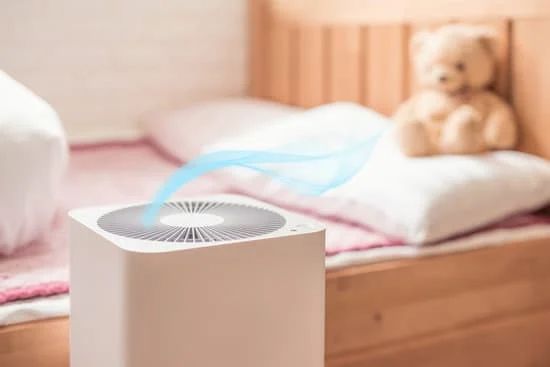
For starters, read the following articles:
1. How to buy the best air purifier – Which Magazine
2. Air purifying guides based on personal health requirements – Breathing Space
3. Air purifying tests – Allergy Cosmos
Plants: Another alternative to consider is to fill your home with plants, as these also have air purifying qualities – some more than others. However, a lot more space is required compared to a standard air purifier device. Most homes will not have sufficient space.
Additionally, the number of plants required to purify a home may work out to be expensive, and it helps if you are green fingered – unfortunately not everybody is. Time for looking after the plants will also be a problem for many people.
Before you buy: Before rushing out to buy a mass of plants or an air purifying unit, keep in mind that studies on the health benefits are few and far between.
Some independent real life research on air purifying units does seem to show some health benefits to certain groups of people, but there is no obvious mention of which type and model of air purifier was used. Research on air purifying plants is similar; however, with plants being relatively cheap, a house full of plants is worth a try and should at least improve your happiness and wellbeing.
Studies on using plants to improve the air quality outside the home are more promising. For example, planting trees in areas with poor air quality has been shown to reduce air pollution and improve people’s health. It is likely, therefore, that appropriate measures to reducing pollution in the home will also help.
Until more research is available, an air purifying unit and/or air purifying plants should only be used alongside the approaches mentioned in earlier sections, such as installing a ventilation system.
A Few Thoughts
It is obvious that regular cleaning and using a vacuum cleaner with a true HEPA filter is worthwhile. Dehumidifiers are useful in certain circumstances, whilst definitive proof on the health benefits of air purifiers is still required.
And finally…
As you have probably gathered, it’s difficult to work out what improvements should be made to improve the air quality in our home.
If you want to learn more about indoor air quality without wading through hundreds of online articles, then by far the best book that we have come across is called ‘A practical guide to indoor air quality’ by Dr Julie Riggs. It may be difficult to come by, but is definitely worth searching for.
SECTION 7 Issues And Energy Savings Outside Of Your Home
♦ Insulation
The type of property you live in may determine what insulation is possible (if not already there). Properties built before the 1920’s tend to be solid-wall properties, and therefore external wall insulation is usually recommended. However, it is expensive and can impair the visual appeal of a property. In that case, internal insulation should be considered, and although this is disruptive, it can be a good option if you also intend to carry out major decoration works.
If your property was built after the 1920s it would likely have a cavity wall and may be suitable for cavity wall insulation. The cost to install is relatively cheap and payback in energy savings is about 5 years. Some residents are eligible for grants and may be able to have the insulation installed free of charge. Check with your energy provider, local authority, or energy advisor.
If you are unsure whether cavity wall insulation has been installed, then look at the mortar for drilled holes. These should be in a regular pattern spaced about a metre or so both vertically and horizontally. Insulation will have been injected into the holes. This is usually mineral wool or expanded polystyrene beads, and in rarer cases foam insulation.
Homes built in the last 20 years or so are likely to have been built with solid insulation already included
Notes: Not all properties are suitable for cavity wall insulation. Properties to be particularly concerned about are those that:
- Are located near the sea or in another area with regular driving rain
- Have a cavity wall with less than a 2 inch gap
- Have evidence of damp walls
- Are built with non-standard aspects such as four or more storeys, an attached garage, extension or conservatory
- Include any timber or steel wall construction.
Expert advice is recommended no matter which type of insulation you wish to consider, and assuming that someone else is carrying out the work, try to check out any long term reviews that give proof as to their expertise.
Unfortunately, with poorly installed insulation of any type, you may end up with damp related problems that can be difficult and expensive to rectify. In particular, the cost of extracting cavity wall insulation can be many times the cost of installing it in the first place.
♦ Cables
There is a need to ensure that any cables entering your property through an external wall are fed through correctly to avoid water ingress.
Satellite cables for example should run down the side of the wall and below the level of the hole (drilled at a slight upwards angle) it is to be fed through. The cable should then gently U-turn up to and through the hole. Any subsequent rainwater falling onto the cable will then run down and drip off without causing a problem.
♦ Pipes
Any pipes exiting to the outside should be checked for gaps and sealed if necessary. Check also that drain pipes are in good condition and that there are no signs of leaks.
♦ Bricks and Mortar
Bricks and Mortar should be inspected to see whether there are any holes or gaps. Perhaps an external light, hanging basket or something else was once fixed to the wall. Over time, any holes or gaps will widen and so should be repaired as soon as possible.
From natural weathering, mortar will eventually crumble and cracks may appear. Repairs should be undertaken before the weather causes any more damage.

♦ Windows
When checking for window draughts, it is easier to inspect from inside rather than outside the home. Where possible, inspect the outside cills to make sure that the seals are in good condition.
♦ Damp and Draughts
The first signs of damp in any area should always be investigated, and any recommended works should be completed at the earliest opportunity. A delay may result in damp penetrating through to internal areas and lead to long term damp, mould and health issues.
Wherever cracks, holes and gaps appear there is the potential for water to enter the property. As we know, damp and mould issues can occur if nothing is done to stop the water ingress. Additionally, draughts will occur if your internal walls have not been fully sealed.
Final Thoughts
It is important to maintain the outside of your home and add insulation where possible. By keeping your home free of damp and draughts, maintenance costs will be minimal, energy savings will be made and your comfort levels will increase.
SECTION 8 Finding Good Tradespeople and Searching for Grants
You’ve made a big decision to carry out energy saving measures throughout your home, but you don’t feel that you have the skills for much of the work. You may also not have any spare money or access to low cost finance.
The first step is to check your finances. If little or none is available and depending on your circumstances, it may be possible for some energy saving measures to be carried out for free. Grants are also often available.
If you do have available funds and are looking to use a tradesperson, a recommendation by your family or friends can often be the best option. Other than that, you’ll need to look elsewhere. There are a number of possibilities, and we’ve supplied links to many of these below.

♦ Your Local Council
Your local council may offer a handyperson service. Minor repairs and improvements, including energy efficiency, are what’s on offer. Some of it may be free to those who qualify. In our area (Salford), the contact telephone number is 0161 793 9419.
Your local council will also hold information on what grants, initiatives or support are on offer from not just themselves, but also other local, regional or national sources. In our area (Salford), the contact telephone number is 0161 793 2264 and up to date details of energy efficiency in the home help is available on their website.
♦ Local Energy Advice Partnership
LEAP (local energy advice partnership) is a help and advisory service to help vulnerable households and those that are experiencing fuel poverty. Simple energy saving measures can be installed for free; energy saving advice is also free, and contact details are given for further help in other areas that the householder might find useful.
The service is fully funded by the main energy providers and is partnered by several organisations, including local authority and social housing providers, food banks, health clinics and Citizens Advice. For more information click the link below:
A free service to help people keep warm and reduce their energy bills – LEAP
♦ The Government Energy Advice Endorsed Website
The Government endorsed simple energy advice website also offers advice and information on the availability of grants.
♦ Age UK
Age UK also has handyperson services in many regions.
♦ Energy Suppliers
A number of energy suppliers also offer funding for energy efficiency measures, under what is called the ‘Energy Company Obligation’. It’s not available to everyone and is aimed at those who qualify for the ‘Warm Home Discount Scheme’ or who are in receipt of certain benefits and also satisfy some income requirements. If you live in social housing with a low EPC rating, you may also qualify for help.
♦ Trustmark
Trustmark is a government endorsed scheme where contractors are vetted before being able to register their details on the website. Technical competence is at the heart of the scheme, and there is more protection for consumers compared to similar schemes.
Eligibility for some grants is dependent on the work being carried out by Trustmark vetted contractors. Checkout the Trustmark website for more information.
♦ ‘Which’ Magazine Charitable Enterprise
Which magazine also has a trusted traders scheme with reviews given by consumers after work has been completed.
♦ Checkatrade
Another similar scheme is operated by Checkatrade where reviews are available.
♦ Rated People
Rated People gives you the opportunity to obtain up to 3 quotes for any job that you have in mind.
♦ Local Heroes
Local Heroes is the British Gas owned scheme and the plus point is a 12 month guarantee for any completed work paid online via their site.
SECTION 9 Eco friendly shopping and more
One of the best ways to reduce our effect on the environment is to determine whether our shopping habits can be modified.
As an example, if we just look at planning our meals for the week, our choices may include walking to a nearby shop, driving to one further afield, arranging a home delivery or even eating out.
Another example, if we are considering the purchase of an appliance such as a washing machine, do we buy the one with the lowest energy use or one that is considered the most reliable? Is it better that it is made and produced in the UK? Should we consider a second hand model?
As you may expect, our choices have quite varying impacts on the environment, and if we wish to work out the effect, then to a certain extent we can use what is called a Carbon Footprint Calculator. These can be found online, although if comparing calculators you will find that each will show a different result for exactly the same product. However, they are useful in comparing how we fare compared to other people.
Why not complete the carbon footprint calculator listed below? Mess around with the figures and see what increases or decreases your carbon footprint:
Okay, if you used the calculator, you may now have an idea as to some of the steps that are needed to reduce your carbon footprint and reduce your impact on the environment.
Let’s take a more detailed look into how we can do this.
Part 1 Shopping for Food
♦ Quick and easy food audit
First of all take a look at the food stored in your cupboards and fridge freezer. Now do a quick estimate as how much of it is fresh fruit and vegetables, how much of it is fresh fish and meat, how much is dairy and how much is a convenience food.
If you’re like most people you will only have about a quarter that can be classed as fresh. It is also likely that whatever type of food you have bought, it will be packaged in some way.
Now that we’ve got to know our shopping habits, let’s break it down a little and see what it means from an environmental point of view.
♦ Fresh fruit and vegetables
If our main consideration when buying food was to reduce our effect on the environment, we would just eat fruit and vegetables that were locally grown and in season. However, that is not realistically possible, but the good news is that no matter where and when it is grown, the carbon footprint of most fruit and veg is generally lower compared to fish, meat and dairy.
One reason is that most of our fruit and vegetables are shipped, and storage costs are largely lower compared to many other foods.
We should bear in mind though, that some fruit and vegetables are air-freighted, whilst a lot of unseasonal popular foods are commonly grown in heated greenhouses (or hothouses, as they are often called). This increases the carbon footprint, and with hothouse grown food some people comment on the lack of taste, not forgetting that the nutritional value may be reduced.

However, as it stands at the moment we have to accept that tastes, budget and time restraints mean we rarely buy the most healthy or environmentally friendly food.
♦ Fresh fish, meat and dairy
Fish:
When looking at the carbon and environmental footprint of fish, it seems there is a tremendous variation due to a number of factors.
For sea fishing it can depend on how it has been caught, the distance travelled to catch the fish and bring it back to the port, the processing of the fish and how far it travels before it ends up on our plate.
We should also consider the effect that overfishing can cause not only to the depletion of fish shoals but also the marine ecosystem dependent on their being sufficient stocks.
For farmed fish, is it sea or inland-farmed, and how has it been farmed? What have the fish been fed on and where has it been sourced from? What kind of welfare standards are in place. In many ways fish farming is comparable to animal farming, but we’re probably even less aware of the farming methods.
When taking a closer look at fish farmed at sea, it is known that parasites and other diseases are common and can spread to wild fish in the general vicinity. It is considered as one reason for their being lower than expected stocks of wild fish found in close proximity to fish farms.
Inland fish farms also have similar issues, and it is said that diseases can spread to other birds and animals and potentially humans.
To expand on the above its worth reading the following articles:
1. Seafood carbon footprint – Russ George
2. Fish farms and the effect on humans and other creatures – National Compass
3. Welfare issues for farmed fish – Compassion in World Farming (CIWF)
Meat:
The average carbon and environmental footprint of meat is much higher than other types of food, primarily because of methane emissions from the livestock, fertiliser emissions from the food grown as fodder and deforestation of land both for fodder and for the livestock to ‘roam’.
Lamb and beef tend to have a higher footprint compared to chickens and pork, although possibly that may be due to the amount of space that is required for rearing and how long they are allowed to live!
Different farming methods also have an effect, and this will be discussed in more detail a little further on in the guide.
Dairy:
There’s quite a variation when comparing the carbon and environmental footprint of dairy products. Cheese, for example, requires about 10 pints of milk to produce a hard cheese like cheddar and has a carbon footprint similar to pork. Eggs can have a carbon footprint a little below chicken, but perhaps more than milk.
As with meat, the different farming methods can have a big effect on the carbon footprint. Buying locally produced dairy products should reduce your carbon footprint.
♦ Nuts, seeds and grains
As a rule, nuts, seeds and grains have a low carbon and environmental footprint similar to fruit and veg. Processing can be minimal, such as taking the shell off a nut or milled as is the case for oats, wheat and barley. Further processing takes place when they are made into cereals such as corn flakes. More concerning is the amount of water required to grow the crop. Rice, for example, requires a lot of water to grow well.

♦ Processed food
Processed packaged food or meals are likely to have a higher carbon footprint compared to the same equivalent prepared with fresh ingredients. More packaging is one reason. Additionally, although the food or meal may have been prepared in the UK, many of the ingredients will have been sourced from around the world.
We should also be mindful that whether processed or fresh, meals that include fruit and veg usually have a lower carbon footprint in comparison to those that include fish, meat and dairy produce.
♦ Packaging
Whatever type of food you buy, there is likely to be some form of packaging. However, when we pop items into our shopping basket or shop online, the negative aspects of packaging are usually ignored or forgotten about.
So when thinking about the food we intend to buy, we should also consider the packaging. If we can do this, then it is much more likely that we will make the right choices from an environmental and carbon footprint point of view.
♦ Food Carbon Footprint Calculator
Before discussing a few more factors that can affect the environmental and carbon footprint, why not check out the BBC article with a food carbon footprint calculator included.
Consider before you Shop
♦ Bags and Containers
Whether shopping locally or further afield, we should try to remember to take sufficient reusable bags or bags for life as they are usually called. Also, if our shopping list includes loose fruit and veg, then rather than use the free bags provided by the shop or supermarket, consider purchasing these award winning lightweight recycled produce bags. They are specially made for fruit and veg and other produce that requires weighing. Some supermarkets also sell produce bags, but they may not have been manufactured quite as sustainably.

Occasionally you will come across what are called zero waste stores and on offer will be produce such as loose nuts, seeds and cereals and refills of detergents, shampoos and more. The chances are that if you already buy from these types of shops, then you won’t need to be reminded to take the relevant containers.
It’s worth finding out if there is such a store near you. The best way to get the latest up to date information is to just to do a search for “zero waste stores near me”. Many national type websites struggle to maintain up to date details of stores opening and closing.
It should be recognised that even the large supermarkets now allow you to bring in your own containers. Depending on the area you live in and the supermarket you shop at, you may able to fill up your containers with not only fruit and veg but also deli, pasta and cereal produce. Containers for your fish and meat purchases are also encouraged in some supermarkets.
♦ Transport
For the fit and healthy, there are a variety of transport options that may help to reduce your carbon footprint. Sadly though, it can be difficult to change our travel habits. The car owners amongst us may prefer to drive as public transport is often considered unreliable and not convenient. Walking can feel like a pain, especially when our thoughts turn to carrying heavy shopping bags back home!
Let’s consider the different methods of transport:
Walking or Cycling:
Walking or cycling is green, healthy and in the long run may reduce trips to the doctors and hospital. You will make more trips, but it won’t take long to realize that you don’t always need to use your car. If the trip to the shop or supermarket is time consuming, consider buying most of your everyday food locally and have your heavier items delivered to your home.

Public Transport:
Public Transport can be a good option if you intended to make the trip anyway. If using public transport regularly, you do need to know that the price is fair and that reliability and convenience is good. As with walking, carrying the shopping back home can be an effort.
Car Travel:
Car travel to the shops is convenient, but not if you are stuck in traffic and have to pay for parking. Unless it’s absolutely necessary, try to avoid car travel and use the options mentioned above or consider a home delivery.
If your car is mainly used for shopping, then consider if you really need it. Selling your car and joining a car club could be the answer as there’s no initial outlay or ongoing maintenance costs. Co Wheels is one such organisation with a national presence. No doubt there are many others.
In the Shop
♦ Packaging Considerations
Even if you have managed to do a lot of your shopping using your own bags and containers, you still be making purchases with packaging. It pays to look at this in more detail. Is it minimal or excessive? Can it be easily recycled or even composted?
Often you find that the packaging includes cardboard attached to various types of plastics, which may or may not be recyclable depending on your local council’s recycling facilities.
To be fair, some manufacturers are now looking at ways to package food products with compostable materials, but there is some way to go before this type of packaging is widely available – worth looking out for though.
So the advice with any packaged product is to think carefully whether it can be easily recycled or whether a more environmentally friendly alternative is available – this may mean choosing a more expensive product, such as one organically produced.
Back Home
♦ Storage
Although some fruit and many vegetables can be stored for relatively long periods, they can lose some of their flavour and health benefits from being stored too long. To avoid waste, cooking a few meals and freezing them for later can be an option. Pickling and fermenting food is also another option.
Alternative Ways to Shop
♦ Online, phone or by post
Although most of our food is bought relatively locally in a shop or supermarket, we are increasingly starting to look at other ways to shop.
Many supermarkets allow online ordering, with the shopping either being delivered to your home at a time to tie into your lifestyle or collected at the store if that is more convenient. There are also online supermarkets that don’t have a presence in the high street.
Specialist or deli type shops may also offer phone and postal shopping. This is a boon to anyone who has difficulty getting out and about or is not confident using the internet. There are also farm delivery schemes available locally and nationally.
Time saved going through the ordering process rather than making your way to the shops is time that can be used for something more exciting.

Food Produced Outside of the UK
♦ Carbon Footprint
If we decide to investigate the origin of our food purchases, whether it is fresh or a convenience food, we will quickly determine that a considerable quantity originates from around the globe. This is not necessarily a problem if it comes by boat, but if air freighted the carbon footprint is much higher.
Unfortunately, food labelling doesn’t inform us of the carbon footprint or the method of transport. We should assume that low priced fruit and veg supplied throughout the year is likely to have come by lorry from Europe or been shipped. Examples include tomatoes, potatoes and bananas.
For want of no carbon footprint figures or knowledge of transport methods, then for food produced outside of the UK, try to buy organic or Fairtrade labelled food. It is likely to be more expensive but should be more environmentally friendly and ethically produced.
♦ Water Footprint
We also should be mindful of the water footprint of the food we buy. This is how much it takes to grow and produce the food that is not only eaten by ourselves but also for crops grown for livestock feed. Fruit and veg compared to meat and dairy usually have the lower water footprint.
In many regions food is grown just largely for our benefit and uses water from various sources such as lakes, reservoirs, rivers or groundwater.
This causes problems if more water is taken than can be naturally replenished. From the importers point of view, if there is a water shortage or any other problem with a crop, they will quickly look to source their produce from elsewhere. The farmers and local inhabitants who need the water for drinking and growing food for their own basic needs are left to suffer the consequences.
In regions that have suffered water shortages or that are naturally dry, desalination plants have sprung up. The water produced from a desalination plant is quite energy intensive and this increases the carbon footprint of any produce produced using this method. Desalination waste contains excessively salty brine and this is usually dumped back into the sea, causing problems to much of the wildlife there.
Unfortunately, water print labels are virtually non-existent. Without taking time to carry out our own research, then we have to put our trust in the people who bring the food to our table. Buying organically or other ethically labelled produce is likely to be the best option.
A Few Farming Methods
So far we’ve mentioned packaged and fresh food, storage, growing your own, methods of transport plus carbon and water footprints. It makes us realize that when making our purchases, there’s so much to consider and you can understand why many people wonder whether it’s worth the effort to buy food that has a minimal environmental impact on the planet. It is also likely to cost more.
To add to your decision making process, it may be useful to know how your food is grown and the differences between intensive, sustainable and organic farming.

♦ Intensive farming
Intensive crop farming aims for the maximum yield and profit, at the lowest cost.
Synthetic or manmade chemical fertilisers, pesticides, herbicides are used with little thought given to the long term health of the soil. Neither is much thought given to the natural habitat, the local wildlife and the wider environment such as the run off of chemicals into streams, rivers and the sea. The farmland is given little opportunity to recover before the next planting season begins.
Intensive animal farming is similar in that as many animals as possible are raised in the smallest amount of space that the law allows. Aside from any minimum standards in place, little thought is given to the welfare of the animals. Poultry, pigs and cattle are often reared inside factory type barns and do not see the light of day. Drugs and antibiotics are routinely fed to the farmed animals, even if they are not ill!
The big advantage to intensive farming is that prices are usually cheaper than organic or sustainably grown food, whilst also being extensively available in our local stores.
♦ Sustainable farming
Sustainable farming aims for a more holistic approach to all aspects of farm methods, including crop health and soil fertility, pollution control and animal welfare. The yield per acre is likely to be lower than intensive farming in the short to medium term. Costs are usually higher and currently it’s difficult to source sustainably produced food in the UK.
Quality marks to consider include the LEAF Marque covering crops and meat production, whilst the Pasture for Life scheme and the RSPCA Assured scheme covers meat production. Free range labels can also be a useful indicator. Fish are perhaps best covered by the widely known Marine Stewardship Council’s blue MSC label. However, as people have different opinions of how useful labels are, it is best to research the pros and cons yourself.
As more shoppers look to purchase food produced by farming methods that care more for the environment, the use of sustainable farm labelling schemes should help.
♦ Organic farming
Organic Farming is currently underpinned by EU law, and although there are several organic control bodies in the UK, the most well-known is the SOIL Association. It’s only through being certified by one of the approved control bodies that you can sell food labelled as organic.
Organic farming is similar in many areas to sustainable farming, with the emphasis being the protection and enhancement of the soil, wildlife and environment. Chemical derived fertilisers and synthetic pesticides are not allowed, whilst the routine use of antibiotics are banned. The strict criteria and measures to ensure that produce is organic can be expensive, time consuming and daunting to farmers who desire to become organic farmers.
As Organic Farming is independently tested, you have the assurance that any produce purchased by you (compared to most other types of farming) has been farmed in a manner that is better for nature, better for the environment and better for the planet.
♦ Another consideration
Grow your own:
If you have the time and space, consider growing some of your own fruit and vegetables. It should save money, reduce your food miles* and cut down your carbon footprint.
Better still is to grow your own fruit and vegetables using locally sourced or homemade compost.
*Food miles is a term used when measuring the distanced travelled from where the crop was grown or produced, to the place where it reaches the consumer. When calculating the environmental impact, the distance travelled and type and quantity of fuel used would be taken into account.
Final Thoughts on Food
There are so many decisions to make, but at the very least we should aim to reduce the amount of food that is wasted. Many people and lots of environmental resources go into producing the food that ends up on our plate. People go hungry, not only on the far side of the world but also much closer to home. Taking a little care with your purchases and donating help or savings to appropriate organisations will go a long way to support those most in need.
We might also check out how and where our food is produced. How much packaging is there? How does being a meat eater, vegetarian or vegan affect the environment?
There’s a lot to think about, but as we said earlier, reducing the amount of food we waste will be our best contribution to the environment and will likely save us some money too. That’s got to be a good thing.
Part 2 Our Other Purchases
Although food purchases play a substantial part in our environmental and carbon footprint totals, other purchases such as appliances, clothing, cleaning and maintenance products can make more of an impact. Let’s now take a closer look at some of our other purchases:
♦ Appliances
Ratings:
First we need to note down the energy rating of the larger appliances. As from March 2021 energy ratings were revised and now range from A to G (replacing the old ratings of A+++ to G), with A now being the most energy efficient. It’s this rating that you should use when the time comes to replace a particular appliance. If however your old appliance is working fine, then keep it. There is a high environmental cost in the manufacture of a new appliance, especially the larger ones manufactured abroad and transported over long distances.
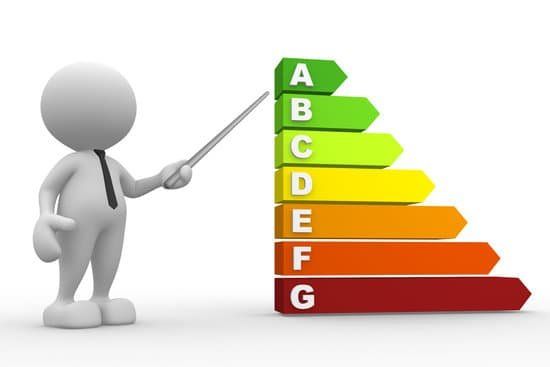
Reliability:
Reliability is worth a lot. After all a very efficient appliance is of no use if it breaks down within a few years. It’s worthwhile researching reliability reviews for both large and small appliances before making a purchase. Online reviews are useful, but be careful of false reviews.
‘Which’ magazine carries out independent research on many products and online reviews are available online, albeit at a cost. It may be worthwhile subscribing for a month’s trial at a cost of £5, but don’t forget to cancel the service if you want to avoid paying for a full year.
If an appliance is broken, don’t immediately look to replace it. Check out whether repairing the appliance is a viable option. For small appliances, find out whether there is a community repair shop in your area. They may only open a couple of times a month or perhaps even less, and although there is no guarantee that a fix is possible, assistance is given to help you repair your item.
The rethinking poverty blog gives an outline of what a community repair shop is and also supplies the names of a few that are located in Greater Manchester.
Size and Capacity:
Consideration should also be given as to whether the size of the appliance is appropriate to your needs. So, for example, have a quick look in your fridge freezer. If it’s relatively empty, you need to think about whether that is usual. Sometimes we buy appliances that are too large for our average needs. A smaller fridge freezer will use less energy than a larger one with the same energy rating. Also fridge freezers work at their most efficient when they are about three quarters full.
Another example: If buying a toaster, is it the most suitable for your needs? For example, if you usually only toast one slice at a time, consider a one slice toaster.
Other considerations:
Note that smaller appliances such as kettles and toasters are unlikely to have energy ratings. So if looking to make a purchase, it is necessary to consider different aspects of saving energy.
For example, when buying a kettle, does it have a see-through gauge to check that you’ve not over filled it? If you have an induction hob, consider a hob kettle as it has no elements and in theory should last for a very long time.
♦ Clothing and related accessories
Depending on which articles you read, the carbon footprint of clothing related purchases range from a couple of percent to over 10% of the average person’s annual total. There are also other concerns connected with the whole lifecycle of our clothing related purchases. Investigating the lifecycle of a piece of clothing may help us make a more informed choice if we are considering a purchase.
Before we do this, we’d like to recommend getting a copy of Ethical Consumer magazine’s Issue No 180 (Sep/Oct 2019). It covers virtually every aspect of the clothing industry and gives lots of options on how and where to shop for more environmentally friendly clothes and accessories.
Note: Although it is possible to find and read many of Ethical Consumer guides for free, we would encourage subscribing to the magazine as this will help them to carry out more important research.
Production and processing stage:
Here we can split production and processing into natural fibres, synthetic fibres and animal fabrics:
● Natural fibres are nature-based and can be sourced from not only plants, bushes and trees but also animals* including birds and even fish! As buyers of natural fibre clothing, shoes and related accessories we tend to shop for garments made from cotton, wool, linen, silk and leather. Bamboo and hemp garments are also now becoming more popular, and this is in part because of their quick growth and their comparatively low water and pesticide requirements.
● At the production stage, clothing produced from natural fibres will have a lower carbon footprint per kg compared with clothing produced from synthetic fibres. Our main environmental concerns are perhaps the large amount of land used and the amount of water and pesticide requirements.

Processing natural fibres often includes the use of chemicals and dyes that often find their way back into the environment via untreated wastewater. This causes not only pollution issues but also damage to all life.
Buy organic clothing if you don’t have the time to research the most environmentally friendly clothing for your needs.
*Animal fabrics can include wool, silk, fur, aquatic skins, leather or down. On the whole we know less about the conditions of animals farmed solely to make clothes and accessories than that for animals farmed for food. General labelling schemes are non-existent and you also need to take into account the toxins used in the processing that make their way into the environment.
This is one area where you have to do your own research before making a purchase. The PETA (People for the ethical treatment of animals) organisation has a website that is worth a good look if you are concerned about the relationship between animal welfare and clothing.
● Synthetic fibres are mainly produced from non-renewable energy sources such as oil and coal, however there are also what some term as semi synthetic and these can be derived from plants, trees and minerals. Production for most synthetic fibres is energy and chemically intensive.
As with natural fibres, the use of dyes can be a problem to the environment. It is the case though that the modern technology used by some companies can deal with dyes in a much more environmentally friendly way.
Clothing is also often treated with chemicals in order to ‘improve’ them. Examples include waterproof jackets or non-iron shirts. Under certain conditions these chemicals can be inhaled or absorbed through the skin and can cause mild or sometimes serious sickness to some people. Check out the Total Health Magazine article about toxins in your clothing.
When looking at post production, the big concern is that synthetic clothing fibres are likely to find their way into the environment. Washing or wearing fibres releases them into the water and the air. Ultimately this means that humans and other animal or aquatic life will one way or the other consumes some of these fibres.
The plus side to clothing manufactured from synthetic fibres compared to natural fibres is that they can be lighter and harder wearing. If therefore comparing for example, one item of clothing such as a pair of nylon trousers’ with a pair of cotton trousers’, the carbon footprint for the nylon trousers may turn out to be lower over its lifetime.
Working Conditions:
The clothing industry seems to be one area where workers work in the most appalling conditions for very little pay. Many will consider that working conditions shouldn’t fall under the remit of an eco- audit; however, you tend to find that the better the pay and conditions are for the workforce, the more consideration is likely to be given to the environmental aspects of producing a particular clothing line.
Without your own research, buying Items labelled as organic or Fairtrade is the easy way of knowing that the workers have acceptable pay and working conditions.
Buying Clothes and accessories plus some related information:
The average consumer buys 60% more clothing than 15 years ago, whilst less than 1% of the material used to produce garments is recycled into new clothing – Ethical Consumer Magazine, Issue 180 Sep/Oct 2019
Peer pressure can make many of us feel the need to buy the latest fashions and it can become addictive. Often, the cost is deferred by using credit, and our purchases are only used a few times before ending up in the back of the wardrobe.
Let’s consider a few alternatives to buying new:
● Seek out specialised stores dealing with the sale or hire of top branded second hand clothing and accessories. These stores can usually be found in cities or large towns. If not, then online shopping is an option, but size issues can be a problem.
● If looking to buy what are perhaps classed as casual clothing or gear for a hobby, then shopping in charity stores such as Oxfam or other more specialised stores shouldn’t cause too much of a problem. Even in small towns availability is not usually a problem and amongst the many online possibilities, ‘Preloved’ is one website that offers a filter to buy or sell clothes (and other items) within an area as close as 5 miles from your home.

● One idea that is becoming more popular is to hold a local event where clothes are swapped. You can search out events near you or perhaps arrange one yourself? You may want to check out the getswishing website which has a really good guide on how to organise an event in your area. We’ve not given a link to the website as it is not encrypted and therefore not totally secure.
You can also ‘swap’ your clothes through an online store, and the swopped website has a way of doing this with its innovative credit scheme.
● Small sewing jobs can be done at home, or for those of us without the skills there are a fair number of small businesses dotted around the UK that offer sewing repairs and clothing alterations. As for shoe and boot repairs, your local cobblers should be able to help.
Buying new may be the only option for many of us, and timeless fashion items should be considered as we are less likely to discard them after only one or two uses. However, regardless of whether our intended purchase is for fashion, casual or work purposes, we should make an effort to find out how it has been made.
In an ideal world our shoes, clothing and accessories would be manufactured locally using environmentally and ethically sourced materials. We would hope that at the end of their useful life, our items would be easily recycled or upcycled.
Unfortunately as it currently stands, if we wish to be environmentally and ethically minded, the majority of purchases require difficult choices with little information to go on. We just have to do our best.
Finally remember, if a new item of clothing or pair of shoes seems cheap, consider the reasons why that may be.
♦ Household Cleaning and General Maintenance Purchases
Washing powders and detergents:
We’ve already touched upon the fact that clothing can contain toxins that can be released into the environment. It would be therefore be a shame to buy clothing that is better for us and the environment but continue to use washing powders and detergents that contain damaging chemicals.
These chemicals are gradually released into your room as your washing dries. So that lovely natural scent you can smell as your laundry dries is likely to affect those with sensitive skin or who have weakened respiratory systems.
Everyday cleaning products:
Of course it’s not only washing powders and detergents that release toxins. Everyday products used for cleaning baths, showers, floors and worktops and polishing furniture also contain toxins; as do personal cleaning and beautifying products.
There are however, many eco-friendly alternative products that are better for us and also the environment. An understanding of the various environmental labels found on product packaging is useful before making a purchase. Consider using the ‘ethicalsuperstores’ “good guides” as a starting point. An explanation is given to the ethical credentials of the various labels that are shown under each product that they sell.

Note: Although a clear explanation is given as to what each label means, it’s as well to recognise that some labels are one’s designated by the store itself and won’t necessarily be shown on the product you wish to purchase.
Despite the limitations of the “good-guides” we can see that labels are a useful way of deciding which products to buy. However, when we’re out shopping, it’s not always possible to remember what the labels stand for. In these instances we should read the product description carefully and look to buy plant based products as these are usually the more environmentally friendly option compared to synthetic or petrochemical based alternatives.
You should be concerned if a label mentions danger or caution and recommends protection for hands and eyes or other parts of the body.
Note however, that even natural and organic products may still cause a reaction with some people.
Priority lists:
Assuming that you can’t afford to replace everything at once, then it might be an idea to make some kind of priority list. How to make a list is difficult and can depend on your situation, but perhaps as a starting point, try to think of the occasions you have some kind of allergic reaction. For example, if you are drying the washing inside your home, do you sneeze more?
Alternatively concentrate on a particular room or area. For example, the cupboard under your kitchen sink is likely to be home to washing powders, fabric conditioners, floor cleaners, disinfectants, window sprays, oven cleaners, disposable dusters and lots of other stuff. All of which has an alternative that is better for you and kinder to the environment.
Even with your priority list, you will probably find it difficult to alter your shopping habits. On the plus side, many everyday items can be bought at not too much of an additional extra cost compared to your usual shop. Changes are probably best done gradually and perhaps as and when savings have been made elsewhere.
♦ Furniture
We’ve mentioned that buying second hand furniture can be a good option. Charity shops and online sites, such as ‘Freecycle’, ‘Freegle’ and ‘Preloved’, all offer furniture at very reasonable prices. And sometimes at no cost apart from perhaps having to pay for transport.
Other options include upcycled furniture made from existing pieces of furniture or reclaimed wood. Prices can be high, but the environmental footprint of such furniture is likely to be low compared to new furniture produced from commercially felled trees and other newly manufactured materials.
However, we have to recognise the fact that new furniture is required from time to time. In such instances we should look for labels that demonstrate the product has been manufactured using materials from a sustainable source.
For furniture made purely from wood, certification is available, and the logos used by the manufacturers can be researched online if we are unsure as to what they mean. The main global certification bodies are the FSC (Forest Stewardship Council) and PEFC (Programme for the Endorsement of Forest Certification).
There is also the not for profit Grown in Britain Certification scheme set up to support the sustainable management of UK timber.
Note: Not all furniture is manufactured from 100% wood and is sometimes made from other materials such as recycled plastic. Check out the Blue Patch Directory for details of how to find British produced sustainable furniture and lots of other products.
A Few Final Thoughts
The biggest difficulty is when and how to source and substitute products you like, with ones that are eco- friendly. Preferably we would buy locally, but often this is not possible, and it is only natural to resent paying carriage charges if you have made the effort to buy eco-friendly products online or by mail order. This is especially so, if your order is only for a couple of items. As we all know, delivery can sometimes be a problem.
Nevertheless, it’s worth making the effort.
SECTION 10 Cleaning And Maintenance
It’s unavoidable; we all have to spend time cleaning and maintaining our home. But do you ever question what the products we use for laundry, washing up, cleaning floors and bathrooms actually contain? Have you ever considered why new carpets and recently painted homes emit strong smells that seem to linger for days or weeks on end?
The answer in many instances is toxins. As explained in our Air Quality and Ventilation guide, toxins can be inhaled or absorbed through our skin. This may adversely affect our health, particularly for anyone with sensitive skin or an underdeveloped or weakened respiratory system.
The production of these products can also be harmful to the environment, and as such we should make an effort to consider alternatives that are kinder to the environment and better for us. A win-win situation.
So now we are resolved to consider the alternatives, we need to work out where to start. Perhaps the best way is to begin with general cleaning, then move on to cover a bit of DIY, and last of all, discuss how some of our larger appliances can be used more efficiently.

♦ Household Cleaning
Traditional Cleaning:
How many of you are familiar with traditional cleaning products such as soda crystals, soap flakes, and white vinegar? They won’t have the nice scent (often toxic) associated with the popular cleaning product brands, but they can clean just as well and have the benefit of minimal impact on the environment. As a bonus, our health may also improve.
A company called Dri-Pak offers a good range of these traditional cleaning products and their website offers excellent tips on how to carry out a variety of cleaning tasks, plus it lists several retailers that stock their products. We think the Dri-Pak list of suggested uses for their products is worth a look.
Probiotic cleaning:
We also came across Microbz, a small company (one of a number) that reckons cleaning your home with probiotics is the way to go. One of the benefits is that the microbes continue to work after their use in the initial clean. Microbz also supplies refill sachets, which help cut down on packaging.
If you are a bit sceptical of the benefits of using probiotics for cleaning, the NCBI (U.S National center for Biotechnology) research article is worth a read.
And for probiotic verified protection against COVID-19, the evogen range of products is worth a look.
DIY cleaners:
Making own your cleaning products is an option for anyone with time on their hands. That way you will know exactly what is in the cleaning products you have made. A recommended book to read is Fresh Clean Home by Edinburgh graduate Wendy Graham, owner of the Moral Fibres eco blog site.
Microfibre cleaning with just water:
If you are worried about even using naturally made cleaning products, then you might be interested in a company called e-cloth.
Their claim is that by just using water and one of their products appropriate to the task in hand, you will be able clean virtually everything with the benefit that over 99% of bacteria is removed.
Note: That there are many other companies producing similar cloths and it’s worth doing a bit of online research to check out claims and prices. As many of you are aware, microfibre has its own problems with the environment. However, over their lifetime, we believe the benefits should outweigh the drawbacks.
Plant based cleaning alternatives:
Due to the fact that we are continually being bombarded with adverts, we will still be tempted by the security of familiar brands of washing up and laundry liquids, kitchen and bathroom sprays and the many other cleaning products we see on supermarket shelves.
Nonetheless, tucked away somewhere on these same shelves, you are likely to find at least some products that are more environmental friendly. Plant based products are usually the better option compared to their synthetic or petrochemical equivalent.
Springing up in many areas are several smaller shops that specialise in eco-friendly products and usually include some shelf space for cleaning products. It’s worth doing a search in your area.
If the eco-friendly cleaning product range in your local shop or supermarket is too small for you to consider a purchase, then it is worth checking out the many online ‘green’ shops.
They are likely to offer a larger range of products. Additionally, some online shops supply guides to help you understand the meaning of the labels you see on each product. For example, the explanation for the ‘Allergy UK Certified’ seal of approval label is that the product has been fully tested and safe to use for those with allergies and other intolerances.
Explanations of these labels and many more, can be found in the ‘ethicalsuperstore’ “good-guides”.
Note: Although the “good-guides” state what each label means, it’s worth knowing that some labels are one’s designated by the store itself and won’t necessarily be shown on the product you wish to purchase.
The Big Green supermarket allows you to click on the label for an explanation and also lets you browse products based on the ethics you choose.
Using the information above and by carrying out your own research, you should easily be able to complete most cleaning tasks in an eco-friendly manner.
Disposable Cleaning Products:
Before moving onto our next section, we should take a quick look at single use disposable products. On the face of it, they appear to be a great help in our busy lives, but their use is not very environmentally friendly and we should consider our first choice to be an eco-friendly washable alternative.
Even when a product is claimed to be biodegradable, it may take one year, or hundreds of years before it breaks down into something that is not harmful to the planet. In the meantime, toxins may be released and there are a multitude of ways that damage is caused to nature and the environment. Fatbergs is one example, whilst plastic being eaten by birds and animals is another.
Products within the single use disposable cleaning category include wipes, dusters, paper handkerchiefs and kitchen towels. If a single use item is required, then try to look for a compostable product that can be added to a traditional home compost heap.
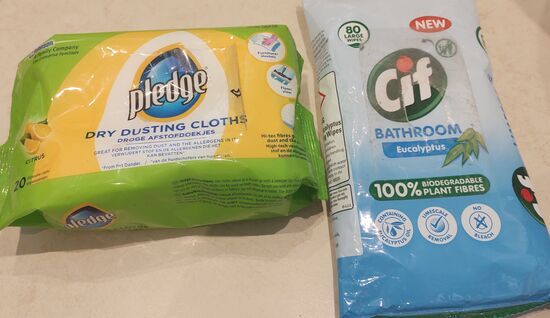
♦ Common Household Maintenance Tasks
The first thing to say is that the subject matter is too broad to fully cover in this section. We can however recommend a very good website that offers instructions on how to carry out virtually any home or garden maintenance and repair job you are ever likely to come across.
The products recommended on the website may not be the most eco-friendly, but there’s nothing to stop you from buying the ‘green’ equivalent if available.
The website is titled DIY DOCTOR and their ‘Essential Maintenance and Repairs for your Home’ section is your entry point for these how-to guides.
One common task that we would now like to cover is painting and decorating; primarily because paint contains VOCs (Volatile Organic Compounds) that are released at room temperature into your home. This is of no benefit to anyone and their toxicity can contribute to health problems for anyone with a weakened respiratory system. Young and older people with an undeveloped or deteriorating immune system can also be affected.
By law there is a limit to how much VOCs paint can contain per litre, and from a health point of view, it better to use those with very low VOCs. There are even paints that can act as air purifiers to help clean the surrounding air. Be aware though, that costs per litre are substantially more than standard paint.
The low VOC and air purifying paint guide produced by CELTIC Sustainables (a shop located in Cardigan, Wales), is our recommended read.
Before we start any painting work, it is likely that there will be several holes or cracks in the plasterwork that require filling. It makes sense therefore to use an eco-friendly plaster and ‘breathaplaster’ seems to come as a highly recommended alternative to other high performance plasters.
There are many other ‘green’ products that you may wish to use to maintain your home. Some of these products can be found in small independent stores. Alternatively Ecomerchant and the Green Building Store have an online presence and are likely to offer a wider range of sustainable products.
Now that we’ve gone over the basics of home cleaning and maintenance, it’s time to take a look at a selection of common cleaning tasks and larger appliances that you may have in your home:
♦ Dishwashers
If you have the luxury of a dishwasher, our expectation is that it is reliable, whilst being energy efficient (A rating) with low annual running costs.
However, it is possible to save a bit more money (and energy) by choosing an ‘air dry’ setting, or if this setting isn’t available, open up the dishwasher door a little and allow the residual heat to dry everything. Avoid a ‘heat dry’ setting, as this wastes energy and costs you money. Eco settings also save you money.
Eco friendly dishwasher tablets and powders seem to get good reviews, and a good range is available from the stores given earlier in the section. If you would like to try out a small family run company’s products, then the ‘Peace With The Wild’ online store is worth a look.
But, no matter what type of dishwasher you use, some regular maintenance is recommended to save energy and extend the life of the dishwasher. Articles by ‘Which Magazine’ and ‘Durability Matters’, offer advice and tips to help you achieve cleaner dishes and maintain your dishwasher in a repair free condition.
♦ Washing, drying and green cleaning
How often:
We all have a different opinion as to when an item of clothing should be washed or cleaned. It will partially depend on how long it has been worn during the day, the weather, how active you’ve been and personal choice.
Rather than give advice here, check out the perhaps surprising ‘Real Simple’ guide and see how you compare!
Washing temperatures:
The lower the temperature that you can wash your clothes, the more you will save on energy and money. 30°C is the accepted figure for most clothes and seems to work fine for lightly soiled clothes. The ‘Which Magazine’ washing machine temperature guide offers advice on the best temperature for different clothes types.
Note: The temperature advice given in the above link and in other articles is often disputed, and this may in part be due to the make and model of the washing machine they use.
Using a washing machine:
How you use your washing machine will affect its lifespan and also how well your clothes are cleaned. After reading through numerous articles, it appears that overloading your washing machine and using more than the recommended amount of detergent seems to be a common failure amongst us all. Overuse of hot water cycles, rarely cleaning the filter and not checking that your machine is level, also crops up a lot.
For more detailed advice and tips on looking after washing machine, check out the following articles:
1. How to extend the life of your washing machine – Domestic & General
2. How to keep your washing machine clean – Saga Magazine
Washing powders and detergents:
Another aspect of cleaning clothes is that different washing powders and detergents have different attributes. Some may be formulated for general use, whilst others are better for heavily soiled, sweaty or stained clothing. We tend not to do individual washes and rightly so as it would become energy intensive and also end up costing a lot. It’s no wonder then that some clothes don’t get cleaned properly. Check out some of the reasons and note the useful advice in this ‘NBC news article.
From a health and environmental point of view, we should recognise that most washing powders and detergents contain chemicals of which some can be toxic. After the washing and cycle has been completed, the wastewater containing many of these chemicals should make its way to the water treatment works. However, this doesn’t always happen, and as a consequence plants and other life forms may be harmed by the toxins and microfibres that they come into contact with.
Some toxic residues will remain attached to your washed clothing and also other items such as bedding linen. Over both short and longer periods of time, these toxins will gradually be released back into your living space. This is most noticeable when drying indoors. So that lovely ‘natural’ scent you can smell as you dry or wear recently laundered clothing, is likely to include toxins and can affect those with sensitive skin and weakened respiratory systems.
As we have stated earlier in the guide, there are many eco-friendly products that are better for us and the environment. Even the supermarket chains are likely to offer a small range of these products.
Drying Clothes:
From a health and to an extent, an environmental point of view, our aim should be to dry our clothes outside. Of course, this is dependent on the weather and the property type you live in. The sun kills off bacteria and helps dry your clothes, but as we are only too aware, it doesn’t always shine and there’s no guarantee of a gentle drying wind. For the increasing numbers of us living in flats and some other types of accommodation, outside space is not always available to hang out and dry our clothes.
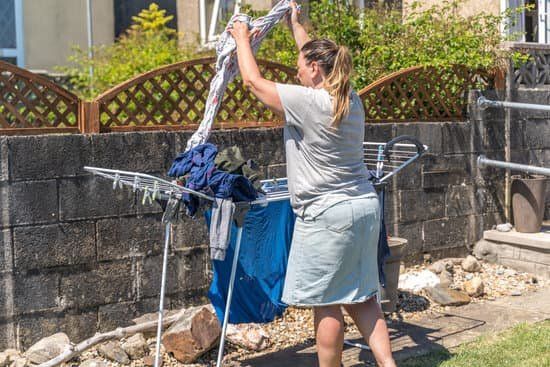
Drying clothes indoors may be the only option, but unless you have a decent humidity controlled extractor fan or ventilation system, there is the possibility that the additional moisture will lead to excessive humidity, and in the longer term may lead to damp and mould problems.
Some extractor fans and ventilation systems include heat recovery functions that will help dry your clothes a bit quicker.
To dry your clothes in the colder months, consider a heated airer. The popular Lakeland ‘Dry Soon’ range of dryers use between 200 and 300 watts per hour and seem to be highly recommended. Running costs will be low and to aid the drying process there are several accessories available to suit different clothes types. A quick search will bring up similar dryers suited to more modest budgets.
Alternatively a hot air heated dryer is another product to consider. The wattage is higher and therefore so are the running costs. However, the advantage lies in portability and the ability to dry clothes relatively quickly if time is short. Sold by Lakeland and other companies such as JML they are worth a look.
On the occasions where clothes are dried indoors, the drier should be located in a utility room if available, or near an extractor fan, such as in a bathroom. That should help keep moisture away from the main living areas.
We mentioned a little earlier that toxins are found in non eco washing powders and detergents and that some will remain in your clothing even after washing. Are you also aware that even fabrics themselves contain toxins? As clothing and other fabrics dry, toxins are released and as we know, they can affect both your health and the environment. That’s a good reason to consider as carefully as possible, not only your washing powder and detergent purchases but also anything fabric based.
For families and anyone with little space, a washer dryer or tumble dryer is often considered a must have. Be mindful however, that they can damage fabrics, be expensive to run, and long term reliability can be an issue. The energy labels displayed on the appliance provide energy efficiency information, but not the reliability.
There are however a number of steps that can be taken to help protect your washer dryer or tumble dryer from unwanted and expensive repairs:
1. Tumble Dryer Tips and Maintenance – Which Magazine
2. How to Maintain Your Washer Dryer – Appliance City
Also don’t forget that a launderette can be a good option as there are no upfront costs or longer term maintenance costs to worry about. It’s a good way of reducing your carbon footprint.
Specialist Green Cleaning:
There are some types of clothing, such as suits, dresses and down jackets that are not suitable for a washing machine and are best taken to a specialist cleaner. Unfortunately, the cleaning process can include the use of hazardous chemicals and is therefore environmentally unfriendly.
Nonetheless, you can clean your clothes without creating a toxic waste. If you can find a locally based green dry cleaner, then that’s great. Alternatively, check out the ‘GreenEarth® Dry Cleaning’ service offered by national brand Johnson the Cleaners. It’s advertised as being 100% and non-toxic to the environment.
♦ Ovens
Like any other large appliance, it helps to understand the features of your oven. However, unlike a washing machine or dishwasher there isn’t much in the way of eco settings.
Double ovens often include a large oven, and also a small oven which is useful when there isn’t much to cook. Other features include settings that enable heat to be directed more towards one area or shelf and in theory should save energy if your food is cooked quicker.
One feature that seems to come with most ovens is self-cleaning. That sounds great, but aside from the fact that using this feature increases your energy use, there is an increased possibility that you will damage your oven.
For the pros and cons of using the self-cleaning ovens feature of your oven, you may be interested in checking out an article produced by ‘FIX Appliances’ an American company which as the name suggests, are in the business of repairing appliances.
Okay, you’ve decided that you’ll clean your oven the traditional way, using eco-friendly ingredients as mentioned earlier in the guide. As you’ve noticed, we’ve been giving links to products that may be suitable for various tasks, and this time the recommendation is to take a look at Sea-Chem, a manufacturer and retailer selling a seaweed based cleaner! The company also sells other innovative products that you may find useful.
A little tip: Switch off your oven 5 or more minutes before your food is ready. For example, if the recipe says it takes 30 minutes to cook your food, switch off your oven at say 25 minutes. Depending on the efficiency of your oven, the residual heat should finish off cooking the food over the remaining time. This will not only save energy but also save you money. Your oven should last a little longer too!
♦ Fridge Freezers
To extend the life of your fridge freezer, it pays to know that the compressor (motor) is the most important component. You want the compressor to work as little as possible. That way less energy is used and breakdowns should be rare. An energy efficient (A) reliable fridge freezer will bring about further savings.
When researching how to maintain your fridge freezer in tip top condition, we found the following recommendations:
● The fridge freezer should be located out of direct sunlight and as far as away from the oven as possible. Also ensure that there is a gap of about 5cm from the wall and if space allows, there should also be a small gap between the fridge freezer and any kitchen units that it stands beside.
● Maintaining a fridge temperature of 5° C is best, but if you feel that the thermostat is not accurate, try 1 or 2 degrees lower. The freezer should be set at -18° C.
● If there is no frost free or auto defrost feature, then defrost at the first signs of any frost or ice build-up.
● Both under filling and overfilling a fridge is not advised. Filling it about three quarters of the way is best.
● The coils attached to the back of the fridge freezer should be vacuumed every so often, as should the top.
An article by ‘Toronto Appliance Repairs’, expands on the above recommendations and is worth a read.
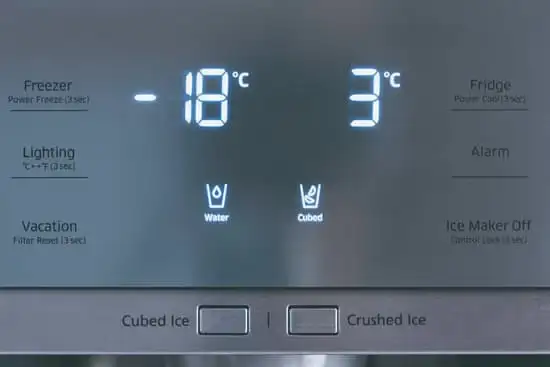
♦ Vacuum Cleaners
Assuming that you have a decent vacuum cleaner with a HEPA or equivalent filter, it is recommended that using it once a week will ensure that your home remains in a nice and clean condition.
However, for many reasons it may not be possible to maintain a regular cleaning routine and so it is important to know the consequences of irregular vacuum cleaning.
A build-up of dust is the big issue in any home. Dust is composed of bacteria, dead skin, outside dirt, dust mites, fungi, hair, moulds, pollen, pollutants, viruses and more. It settles everywhere and can be harmful to your health.
Regular vacuum cleaning will reduce the dust and its harmful effects, but you will probably need to take additional measures to completely get rid of moulds and fungi spores that have spread to unnoticed damp areas of your home.
In such instances, some kind of decent ventilation system is advised, as mould and fungi can not only affect your health but also eventually destroy the fabric of your home.
If vacuum cleaning is the kind of task that you would rather put off for another day, then the ‘nasty things’ blog by ‘Spotless Vacuum’ may motivate you to change your mind!
Anything Else
Although we’ve tried to cover a broad range of subjects within this section, we realize that there are lots of gaps. However it is important to keep on top of the cleaning and any maintenance tasks that crop up. Doing nothing may prove costly to not only the condition of your home but also your personal health.
If a task is outside of your expertise or you have difficulties for any other reason, then help may be available through various schemes or organisations. Also check out our ‘Finding good Tradespeople and Searching for Grants’ section.
SECTION 11 Waste and Recycling
Fact – Based on 2017 data, the average waste of a person in the UK is just over 400kg a year; whilst a study by the University of Sussex found that the average family in the UK throws away 20% of all the food they buy, costing up to £800 a year. See the BBC article below:
Where does our recycling and rubbish go?
It’s easy to congratulate ourselves as we fill our recycle bins with our daily waste and drive to the local recycling centre with our broken or unwanted larger items, but all said and done, it’s still waste.
We also have a problem in that although it is possible for most of our waste* to be recycled, existing facilities can only recycle certain types of waste. The rest may end up being incinerated** or ending up in landfill. This includes many items that could be reused, refurbished, repaired, upcycled or even composted!
We should therefore make an extra effort to modify our buying habits and also how we treat our waste.
*Residents in Greater Manchester can use the handy A-Z guide to help you recycle and dispose of your waste safely.
**Many people buy into the idea that incinerators are a good way of producing energy compared to the alternatives. Before moving on from this part of the section, it might be worth reading the gaia article by Paul Connett, PhD who passionately believes that waste incineration is a very bad idea.
Okay, let’s now look at how we can reduce or better still recycle the different waste types that we create:
♦ Food
As far as food is concerned, aim to buy it without any form of packaging and avoid costly convenience meals. Buying smaller quantities of loose fresh fruit, veg and other food on a regular basis will cut down the chances of overbuying, and reduce not only your food waste but also the packaging.
Over a year you should in theory save a substantial amount of money, but you do have to bear in mind that supermarkets often charge more for loose food compared to their packaged equivalent.
Shopping in local shops such as bakers, cheesemongers and greengrocers is usually the better option, as more of the food is sold loosely or uses less packaging than that bought in a supermarket. Additionally, it’s more likely that the produce has been locally sourced.
A better way to shop
Where you have an option to buy loose food, try to avoid using the shop’s free produce bags. If you don’t have a suitable bag, they may be available to purchase in the shop or from an online store such as these award winning lightweight recycled produce bags. They are specially made for fruit and veg and other produce that requires weighing.
After taking your fresh food home, you need to consider how long it can be stored for. Remember that flavours and health benefits can be reduced if fresh food is stored for too long. It can also go off.
To reduce the possibility of waste, plan ahead and where appropriate, cook meals for sticking in the freezer to eat at a later date. Pickling and fermenting food is also another option.
Despite your best efforts, you will still have some food waste. This may be just stalks, leaves or pips that are considered edible but you can’t bring yourself to eat in any form. It could be rotten food unnoticed at the time of purchase. There are lots of reasons, so now we have to decide what to do with it.
Many Local Authorities provide food caddy bins, and waste food placed here will be composted at a local recycling centre. To make the compost more balanced, additional ingredients such as wood chips and garden waste will be added and the resultant compost sold on for commercial use.
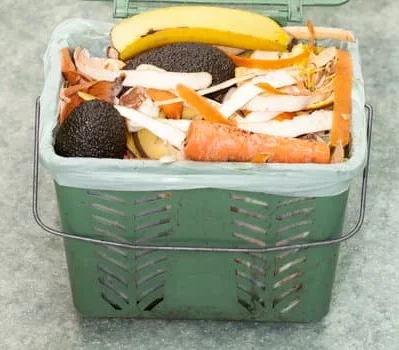
You can also compost food waste at home. There are many composting systems out there, including indoor systems such as Bokashi.
Inevitably you will also have packaging to sort out and more so if you buy a lot of convenience foods. The packaging will include cardboard and various types of plastics, which may or may not be recyclable and will depend on your local council’s recycling facilities.
If you have to buy convenience food, look out meals with compostable* packaging. More and more manufacturers are now looking at ways to package food with compostable materials, although there is some way to go before this packaging type is widely available.
*If the packaging says it is home compostable, it can be added to your compost bin or heap and will be easily compostable along with your other food scraps, grass cuttings and twigs etc.
If the packaging says it is commercially compostable, it requires a more constant high temperature and regular turning to make it into useful compost. Usually only industrial sized compost facilities can make this possible.
♦ Clothing
There comes a time when your clothes, shoes and other fabric items (such as bed linen), are of no use to you. Repairs may not be an option because of either cost or the state they are in. Clothes may not fit you anymore or in fact you just want rid.
However, that doesn’t mean that they should just be thrown out. First, consider whether you can upcycle them. From bags to puppets, there are lots of ideas out there. Take a look at the inspirational ‘love your clothes’ website.
A little earlier in the section we mentioned that clothes and accessories can be purchased through online stores such as ‘preloved’. You can also sell your clothes and accessories through these same stores.
If you don’t have the time or inclination to sell your clothes, then local and national charities will happily accept items in a reasonable condition. Clothing Banks are also situated in many towns and cities and will take a wide range of clothes or shoes.
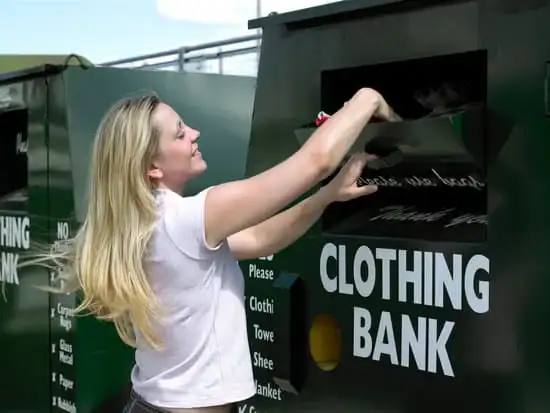
If you are unsure whether a charity will accept your clothes or other fabric items, consider donating them to the national charity Oxfam. They guarantee a use for any clothing or textile item (including shoes) no matter what the condition.
Also don’t forget that clothes made solely with natural fibres such as cotton and wool can be composted; but as the fibres are strong and are likely to take a long time to compost, shredding as much as possible will help.
Note: There is a concern that some dyes used in the production of clothing can be harmful to the environment and in theory, compost from clothes used for growing food, can have a detrimental effect on your fruit or vegetables.
♦ Cleaning, Laundry and General Maintenance Products
Although most cleaning and laundry items use plastic packaging, products such as perfumes, furniture polish, solvents and paints may come in glass or metal containers. Recycling some plastics can be a problem and will depend on your local council’s facilities, whilst glass or metal items can usually be easily recycled. Some waste is classed as hazardous* and should be taken to your local recycling centre rather than placed in your usual recycling bins.
Disposable products such as floor wipes should be disposed of in your general waste bin. This includes so called flushable ones as they can contribute to fatbergs before biodegrading. Paper kitchen towels and similar can be composted if they have not been chlorine-bleached (to make them look whiter).
If you are unsure whether an item can be recycled, contact your local council recycling centre (either by phone or email). Most council websites also have a section on local recycling facilities.
Another option available in some shops is being able to refill bottles or containers with washing up or laundry liquids, shampoos, and soaps. The choices are minimal, but you do tend to find that what is available is more environmentally friendly.
♦ Furniture, Appliances, IT Equipment and Broken or Unwanted Stuff
When buying new furniture or appliances, you often find that the packaging is excessive. The manufacturer’s argument is that it is there to protect their products from damage occurring during transit. Whilst this is true to a large extent, there can be no excuse in trying to source more environmentally friendly packaging.
As consumers we should do our best to recycle any packaging as best we can; but prior to any purchase, it might be an idea to carry out some research into the company’s ethics. The highest rated tend to at least consider more sustainable packaging and are less likely to be wasteful in other areas. Ethical Consumer magazine supplies ratings for many companies.
Don’t forget that buying second hand can be a good option, and in particular good quality furniture can be bought for a very reasonable cost. Older appliances though, are likely to cost more in energy usage compared to newer models and may also turn out to be unreliable.
From time to time you will have items that are broken or unwanted. For broken items, check out whether they can be locally repaired, rather than disposing of them at your local recycling centre.
Community repair shops run by volunteers are another option. They may only open a couple of times a month or perhaps even less, and although there is no guarantee that a fix is possible, assistance is given to help you repair your item.
The ‘rethinking poverty’ blog gives an outline of what a community repair shop is and also supplies the names of a few that are located in Greater Manchester.
For unwanted stuff consider donating them to a local charity or passing them on for free to family, friends and neighbours. The online sites ‘freecycle’ and ‘freegle’ are also another way of giving away items for free.
Food banks are another option. Besides food donations, they also accept personal and general household items. The Walesonline article takes a look at other items that may be as important as food donations.
There are also many ways to sell your items. Examples include Car Boot Sales, Gumtree and EBay. Cash raised could fund your green living ideas.
Do remember though that IT items such as computers or monitors may contain sensitive information and hazardous materials. Your local recycling centre will probably be able to take most of the items.
The alternative option is to contact a specialist organisation that may collect your equipment for free and securely destroy any data that remains. Many items can be refurbished and are appreciated by charities or other community organisations.

Through the website links listed below, you should be able to arrange collections for not only your IT equipment but also many other electrical items:
1. A wide range of electrical equipment – Weee Charity
2. Computer and similar equipment – Smart Tech Recycling
3. Computer and Waste Electrical Equipment – UK I.T. Recycling
*Hazardous Materials
There are some types of items or materials that may not be recycled at your local recycling centre, or even one of the specialised types of companies mentioned just above. These include medicines and waste fuel. To get more of an idea of what hazardous materials can’t be recycled and who to contact for safe disposal, check out the informative Conwy County Borough Council’s website.
♦ Junk Mail
According to Veolia over 17.5 billion pieces of junk mail are produced and distributed each year in the UK. That’s a lot of stuff we don’t want to read and an utter waste of scarce resources.
By doing something about it, we will save a lot of trees, help wildlife and save on production costs…what a great way to help the environment.
Luckily, there are some fairly easy ways to cut down on junk mail. Have a look at the Citizens Advice website for suggestions on how to do this.
♦ Composting
It is to be expected that your regular refuse service has provision for collecting not only your kitchen waste but also grass cuttings, leaf fall and twigs from the garden if you have one.
If not, there are various types of composters that can turn your waste into compost and be used to provide nutrients for our plants, trees and fruit and vegetables if you grow them.
If composting is of any interest to you, then check out our Wildlife Gardening section for more information.
SECTION 12 Travel
Many of us find it difficult to change our travel habits. We prefer to use our cars as we consider public transport to be expensive, unreliable and not particularly convenient. We feel that we deserve our holidays abroad and air travel is often seen as the only option.
It is unfortunate that any good work in reducing your carbon footprint in other areas such as heating and lighting can be quickly undone by extravagant car usage and a couple of trips abroad travelling by plane.
Let’s consider the alternatives:
♦ Car Owners
Based on a report commissioned by Transport for Greater Manchester, Greater Manchester Combined Authority and Andy Burnham; it is stated that one in three car journeys in Greater Manchester were less than a kilometre, which could be covered in 15 minutes on foot, and change was clearly needed to encourage more people to travel actively.
From the above statistic, we can see that with only a little effort we should be able to reduce our car usage.

Shopping:
Can our weekly shopping trips by car be reduced? Perhaps make more trips, but use public transport or if the distance to the shops is not too far consider walking or cycling.
Walking and cycling is greener, healthier, and over the long term may reduce trips to the doctors and hospital. If walking is a problem, online shopping can be considered. This may be greener than even traveling to the shops by public transport, albeit at the expense of some local shops missing out on your custom.
What do you think? Have a read of the ABTS Training ‘home delivery vs a shopping trip’ research report.
Work:
For traveling to work, look at the possibilities of cycling or taking public transport. It doesn’t have to be every week, perhaps just during the school holiday season when the roads are a little quieter. Trains or Car share may be an option too.
For some, there is also the chance that you could work from home. Are you able to approach your employer with such an approach? Even taking into account the extra energy used at home, significant energy and monetary savings can be made by you and your employer.

The School Run:
For the school run, walking shouldn’t be a problem for short distances. As we know, exercise will bring long term benefits to everyone. Car sharing may be the other option for those of you living some distance away.
UK Leisure Trips:
For UK based leisure and holiday trips, compare bus, coach and train to the car option. Train is usually best, but not always if it’s powered by diesel and you have an electric car.
A Change of Car:
From time to time, car owners want to or have to change their car. If your intention is to buy a new car, you should take into account that the CO2 emissions produced in the manufacture of new cars varies tremendously, even within the same class.
To give you an idea of the emissions of the type of car you are interested in, have a look at the ‘Next Green Car’ website. Try to choose one with low emissions.
Better still, consider purchasing a used car as this saves on the carbon manufacturing emissions of a brand new car.
From an environmental point of view an electric car is best, whilst hybrid cars are generally (but not always) viewed as being a little bit better than either petrol or diesel.
Note though, that from a carbon footprint point of view, you should hang onto your old car until it starts to spend more time getting repaired than being driven.
If you don’t spend much time in your car anyway, then joining a car club could be the answer. There’s no initial outlay or ongoing maintenance costs. Co Wheels is one such organisation with a national presence. No doubt there are many others.
♦ For Trips Abroad
Leisure:
For leisure trips abroad, a flight is often the only viable option unless you want to holiday in mainland Europe and have good transport links to Eurotunnel or a ferry port. You may also find a suitable holiday travelling by coach. Really your only other option is to look at taking more holidays in the UK.
Business:
Business travellers should consider whether these trips are necessary; a Skype, Zoom or Webinar may be the more productive answer for both yourself and your company.

Anything else
After arriving at our destination, whether it’s for holidays, work, visiting friends or relatives, our mind-set should still be to think ‘green’. For example, when staying in a hotel, turn the lights and air-conditioning off when you leave your room; and don’t ask for your towels to be changed every day.
Also remember that many destinations rely on visitors to help keep the local economy going. If you can afford it, make a point of buying food, drink and other consumables in the area you are visiting rather than bringing it from home.
It will probably cost more but without your support, shops, pubs, restaurants and other businesses could fold which ultimately reduce the overall experience of visiting the area.
Section 13 Wildlife Gardening
Whether you have a garden, backyard or even a small balcony, it’s still possible to create a nature inspired habitat that can be appreciated and enjoyed by ourselves, whilst providing a haven for wildlife. At the same time, it may be possible to incorporate features that save energy, money and even improve our health!
Our first steps are to record what we already have and then work out what features are achievable given the size of our potential wildlife paradise! If you have the time, sketching out a plan of your garden may be useful.
Note: Although backyards and balconies may not provide for all of our wildlife, they can be seen as stepping stones to a more suitable habitat elsewhere.
Okay let’s begin:
Part 1 A Garden of Possibilities!
♦ The Lawn
A lawn has the potential to play an important part of your wildlife garden. Although close cropped lawns provide little in the way of insects for birds and other small creatures, some birds may find it easier to pick out worms.
If the grass is given the chance to grow a little, the insect life is much greater and will provide better and more food for wildlife. Perhaps leave one area uncut for a month or two. You may be surprised at the colour that evolves. Birds, bees, and other insects will love it, as will many small creatures.
If not too wet and clumped up, lawn clippings are good for the lawn. Worms, fungi and bacteria effectively compost the clippings naturally back into the soil. Excess and wet clippings can be added to a compost bin or heap.
Depending on the size of your lawn, it’s worth considering giving up a little part of it for some the features mentioned elsewhere in this section. You may be able to attract a wider variety of wildlife, while cutting down on lawn related maintenance jobs such as mowing the grass.
♦ Trees and Hedges
A garden with a tree will attract a much richer variety of species compared to one relying purely on plants and flowers. The whole of the tree including the roots, trunk, branches and leaves can provide food, shelter, shade and a living area.
Many trees are suitable for hedging, and although requiring more regular pruning and looking after, hedges provide similar benefits to taller trees but with more nesting opportunities for smaller birds. They also afford cover for hedgehogs in many areas.
Trees and hedges also help protect against floods. They provide insulation against noise and act as a barrier against the weather elements that can cause damage to our homes. They also provide a cooling effect in the warmer months.
Many of us already know that trees absorb carbon dioxide and provide us with oxygen, but are we aware that they also absorb air pollutants and join up with fungi and bacteria to clean soil contaminates? Last but not least, they help to purify our water supplies.
All of these benefits come at low cost and can be there for a lifetime.
Note: If making a plan of your garden for wildlife needs, you can record trees that stand not only within your garden but also those that overhang from outside (public area or neighbours garden).

♦ Plants
Plants can be considered the main larder for all wildlife, including us humans. They also provide shade, nesting opportunities and other benefits.
With a view to making your garden more wildlife friendly, it may be sensible to jot a few notes on the plants that thrive and those that don’t do so well. Is it because there is too little or too much shade? Perhaps the ground is too dry for some plants or boggy for others. Maybe they need space and don’t like being crowded out.
Are birds, bees, butterflies and other wildlife regular visitors to your garden or is there not much on offer? Perhaps they only visit in summer. What ideas have we got to improve the habitat?
There’s a lot to think about, but a little time and effort on your part will bring about benefits for many years to come.
♦ Animals, birds, Insects and invertebrates
They’re part of and are perhaps the main natural contributors to a healthy balanced ecosystem. They do, however, need the right habitat in which to do their work. This is where we can help by providing the right features and environment in our garden.
In no particular order, benefits will include pollination, seed dispersal for growth in new areas, improved soil structure, plant fertilization, providers of food, waste disposal and species regulation.
The budding ecologists amongst you can study all of this right on your doorstep, whilst the ever changing wildlife can be appreciated by everyone throughout the seasons.
As our wildlife spends much of its time on the move, identification can be difficult, especially if we’ve not involved ourselves in nature’s world. So record what you can, it gives you something to work on as you gradually carry out your nature friendly improvements.
♦ Soil Identification
Identifying the soil type in your garden will be helpful in deciding on plants for the border, wild flowers for a mini meadow, pond and bog garden location and what to leave as lawn. Those listed below are the one’s usually mentioned in gardening articles:
Clay soils are sticky when wet and take time to drain. After prolonged heat it becomes hard and is identified by sight of cracks. It is high in nutrients, but if the soil has too much clay, then many plants struggle to grow.
Sandy soils drain well and feel gritty. Although easy to work with, they dry out quickly and lose their structure. They tend not to contain as many nutrients compared to clay. Plants that need little water are best suited for sandy soils.
Silty soils have a good balance of water retention, hold nutrients well and are easy to work with. Broad arrays of plants are suitable for this soil type.
Chalky soils are found in some areas. Although fertile, they don’t hold on to water or nutrients well. Because they are alkaline, you are restricted in what plants to grow.
Peat soils are rarely found in gardens. The soils are formed of partially decayed organic matter and can be found in either lowland or upland areas known as peatlands or peat bogs. These areas store huge amounts of carbon and are home to rare flora and other wildlife. Unfortunately, its popularity as a garden compost has resulted in the loss of large areas of environmentally important peat bogs. As such, if you need to buy compost, look for bags that are labelled peat free.
Loam soils are a mix of clay, sand and silt soils and are considered to be the best all round soil type for most gardens.

Note: Most soils will also include organic matter, fungi, and bacteria; and a few stones as well!
Non-vegetated areas include patios and other paved areas, walls, fences and in fact anywhere that has the potential to support nature. Record each area and at the same time think about the possibilities. Is there room for containers full of herbs? What about a window box with bee friendly flowers? Can nest or bat boxes be attached to the house? What about a hole in the fence as a hedgehog corridor? The possibilities are many; be creative and let your imagination run wild!
Part 2 It’s Time for Action
We now have a baseline from which to work. Decisions need to be made on whether adding features to our ‘garden’ will bring extra benefits to wildlife and nature. Sometimes it’s best to leave things as they are.
Time and budget will come into play, but assuming you plan to go ahead, consider implementing the following features:
♦ Pond
In many areas, particularly suburban, the nearest natural water supply may be many miles away. Streams, natural ponds, wetlands and other water sources may have been filled in when building our homes.
Creating a pond is a great way to attract water loving wildlife such as damselflies, water beetles and frogs. For birds it provides another source of food, a good supply of drinking water and bathing opportunities.
Ponds can be as big or small as you like. You can make your own, use a planter, trough, container, or even purchase a pre-formed pond. What they all should have in common is at least one gently sloping side to allow smaller animals to step in and safely drink or bathe. Preferably use rainwater to fill your pond; it’s more suitable for the insect and animal life you hope to attract.
Given time, local plants will naturally colonise your pond, but to give it a helping hand look to introduce oxygenating plants (or an oxygenating solar fountain), floating plants and also plants to provide shade.
For suggestions on pond plants to attract wildlife and other pond related advice, the Royal Horticultural Society is a good source of information.
♦ Waterbutt
You may have plants to water, but are you thinking of using tap water from your home? The supply to your home uses lots of energy to produce and can be expensive to use if you are on a water meter. It’s far better to use rainwater, and a Waterbutt connected to your drainpipe is ideal for this purpose.
Waterbutts come in all shapes and sizes. Some are basic, whilst others look like big urns. Additional opportunities for nature are also possible as a number of Waterbutts include integral planters.
Try your water supplier for discounted water butts. Alternatively just input your postcode details into the SaveWaterSaveMoney website. The website holds details on Waterbutts and other water saving devices available for a discount from all participating water supply companies.
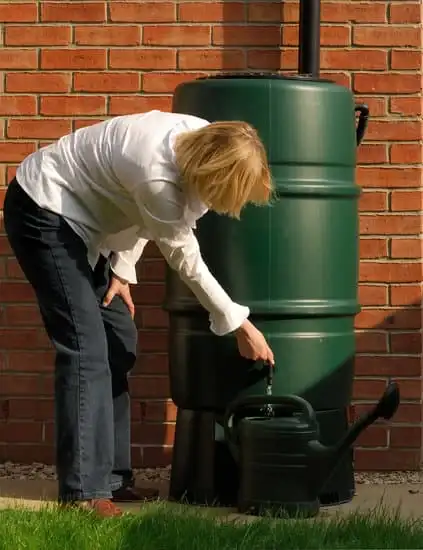
A waterbutt is a great resource for free water
♦ Trees and Hedges
As we mentioned earlier, a tree supports lots of wildlife and can provide a lifetime of benefits. If you intend to plant any trees in your garden, then think about their position and also the potential size when mature. You don’t want to incur the wrath of your neighbours, and trees grown too close to your home, may prove to be problematic to your drains or house foundations.
Also, look for native trees that are likely to be more suited to the local wildlife. The Woodland Trust suggests over a dozen trees that may be suitable for planting in your garden. If any of the trees are unavailable through your local nursery, the Woodland Trust’s online shop stocks a wide range that can be planted all year round.
♦ Flowers, Climbers, Shrubs, Herbs and more
Our aim here is to provide a rich habitat that will provide food and shelter for wildlife throughout the seasons. You will be restricted by the size of your garden, but look for flowers and shrubs that can provide a variety of seeds and berries at different height levels to help ensure a more diverse wildlife in your garden.
Birds, bees, caterpillars and other insects are attracted to different coloured flowers and types of foliage, so learning about their preferences will be helpful.
As you may be aware, bees and other insects like the sweet nectar from flowers, whilst the pollen is collected by bees and used for its own purposes. Pollen’s fundamental purpose is to fertilise other plants; it can be transferred by insects such as bees, the wind, and even by animals brushing by.
Although our gardens can support a wide variety of native plants, it doesn’t mean that we should ignore plants from further afield. They may provide as good if not better, year round food and shelter for our wildlife. Take care though, to avoid invasive plants, as these will cause no end of problems further down the line.
Where there are no hedges, we can look for opportunities to grow climbers, perhaps interspersed with border plants of different colours and sizes.
If you need inspiration there are many resources, and links to two useful websites are given below:
1. Gardening for wildlife – RSPB (Royal Society for the Protection of Birds)
2. Plants for a wildlife garden – RHS (Royal Horticultural Society)
♦ Composts, composting and composters
Virtually everyone has some kitchen waste, and probably grass cuttings, leaf fall and twigs if you have a garden. This waste can be turned into compost and used to provide nutrients for our plants and trees plus fruit and vegetables if we grow them.
There are various types of composters and composting systems, with some accepting all waste including fish, meat and bones, whilst others are best suited to compost vegetable matter.
Compost heap:
If you don’t wish to buy or make your own composter, then consider a compost heap in a corner of the garden. It will attract all kinds of wildlife and in time will probably provide the best type of compost. Turning it over from time to time will speed up the process.
However, depending upon where you live, it may be advisable to not add kitchen waste to your compost heap as it can attract rodents.
Note: Some Greenhouse Gases are released under this method of composting.
Standard Compost Bin:
A standard recycled plastic compost bin will accept most vegetable waste but not fish, animal and dairy waste. Often called cold composting, the process begins with microbes, whilst the larger species such as earthworms, slugs, snails, beetles and the like continue the good work.
Composting without your intervention can take quite a long time (from 3 months to maybe 2 years) and will depend on location, temperatures and the waste mix. Aerating regularly will speed up the process.
A mesh base or similar is recommended if rodents are likely to be a problem.
For want of a basic compost bin, the ‘Blackwall’ composter is made from recycled plastic, gets good reviews and can be bought from the ‘even greener’ store.
Note 1: Most weeds and pathogens will not be killed off and will remain in the finished compost, whilst on the plus side, disease suppressing microbes also survive.
Note 2: Some Greenhouse Gases are released under this method of composting.
If you want to learn more about this type of composting, our recommended publication is ‘The Rodale Book of Composting’ published by the Rodale Press.
Hotbin Composter:
Hot Bin Composting can process all kitchen waste, including fish, meat and dairy. Green waste such as grass cuttings and twigs will aid the composting. As in standard type composting, microbes will get to work on processing your waste. The difference here is that the hotter temperatures allow a higher number and different species of microbes to operate and speed up the composting.
Good quality compost should be available in 3 to 6 months depending on location, temperatures and the waste mix. Aerating regularly will speed up the process.
Hot Composting bins are designed to allow air circulation but keep out rodents. Some bins also allow worms to enter and although they won’t survive hot temperatures, they will be useful if the temperatures drop.
Two hot bin composters with good reviews are available from HOTBIN composting and Great Green Systems.
Note 1: Most weeds and pathogens will be killed off if the composting temperatures are high enough, however this means that disease suppressing microbes are likely to be also killed off.
Note 2: Some Greenhouse Gases are released under this method of composting.
Note 3: Maintaining a hot temperature can be difficult if there is not a regular supply of the right combination of waste or if the outside temperature is too low (such as winter or other cool days or months).
Wormery:
A Wormery is in effect a farm and you’re the farmer! You’ll have microbes and specific types of worms to compost the material. Most types of matter can be introduced into your wormery, but fish and meat should be omitted to avoid unwanted creatures.
Once you’ve established a healthy wormery, you can expect a supply of compost in about a month or two.
Note 1: Most weeds will not be killed off and will remain in the finished compost.
Note 2: Some Greenhouse Gases are released under this method of composting.
Bokashi:
Bokashi isn’t actually composting in the strictest sense. It’s a method to quickly improve your soil fertility by adding fermented food. The actual method of fermentation takes place under an anaerobic process reliant on the introduction of what are called ‘effective microbes’.
The only requirements are a couple of medium sized Bokashi buckets and a tub of bran that has already been inoculated with the right microbe types.
The usual method to start off the fermentation process is just to sprinkle the base of the buckets with some of your bran, add your waste food (you can include fish, meat and small bones), squash it all down a bit and then close the lid.
You continue this process until the bin is full. The fermentation process will take just two or three weeks before it is ready to be mixed in with your soil. Over time, as it decomposes, rich nutrients will be added to your soil and this in turn will help your plants to grow. Start using your second bucket as soon as the first one is full.
Note 1: Suitable for any amount of waste, the Bokashi method can safely be used indoors or outdoors. As the fermenting material is fully enclosed there are unlikely to be problems with rodents. Virtually no greenhouse gases are released under this method of composting.
Note 2: If want to read about the Bokashi method of composting, a recommended book is Bokashi Composting, Scraps to Soil in Weeks by Adam Footer, published by New Society Publishers.
Note 3: For an alternative and perhaps scathing view on Bokashi ‘Composting’, check out the Garden Myths website.
Local Authority Green Waste Collection Services:
If you don’t make your own compost, it is likely that your Local Authority will collect your kitchen waste for free. Green waste such as grass and hedge cuttings can also be collected for free, although we understand that some Local Authorities make a charge.
After collection, your green waste will be taken to a large scale composting facility. The waste is then added into compost heaps which are similar to the ones you might see in a large garden or your local allotment – but on a massive scale.
By using hot composting techniques, and carefully blending with green materials from other sources, the finished compost will be weed free and certified before being sold on for commercial use.
Note: Some Greenhouse Gases are released under this method of composting.
Anaerobic digesters:
Anaerobic Digesters rely on microbes that thrive in warm temperatures and the absence of air to break down the green waste. Methane and Carbon Dioxide are the main greenhouse gases that are released, and this is captured to produce Biogas that can be used as a fuel source.
At the end of the anaerobic digester process there will be some liquid and also some solid remains. This is called digestate, and can be used directly as a soil improver or processed to produce compost and other valuable products.
Anaerobic digesters tend to be only viable on a large scale, but are worth considering if you can involve the local community.
Note: To maintain the anaerobic process, the temperature should be kept within a certain range. The process also requires that the right mix of waste food, grass cuttings, leaves and twigs etc. is readily available.
♦ Wildlife Homes
To entice the wildlife that you wish to see or hear in your garden, building or buying a Wildlife home can seem like a great idea.
It usually is, but before spending time and money on for example, providing a dream home for a hedgehog, do some research to make sure that the hedgehog you want to attract, actually frequents your area and can access your garden.
The location is also key. For example, a nesting box placed in open view near a bird feeder could encourage natural predators to lie in wait.
Potential homes for you to consider include twig and log piles in shady spots for fungi, insects and other small creatures, bug and bee hotels, bat boxes plus nest boxes for swifts, swallows and house martins.
If after carrying out your research, you have decided to build a ‘Wildlife Home’, you may be able to find the resources locally and for free, but for ease, buying may be your preferred option.
However before you make the purchase, try to find out how it has been constructed. Many are badly made with splinters, treated with chemicals, have the wrong size of opening, and often, no thought has been given to the health and safety of the particular creature you are hoping to attract.
A good example of how easy it is to buy the wrong type of wildlife home is given in Marc Carlton’s excellent ‘foxleas’ wildlife website. In it he gives instructions on how to make and manage a ‘Bee Hotel’ that actually works, and why you may be wasting your money if you have bought a commercially made ‘Bee Hotel’. Lots of worthwhile information is also given in other sections of his website.
Moving on, don’t forget that many creatures are nomadic and don’t have nests or homes as such. For example, in between searching for food or finding somewhere to lay eggs, butterflies will look for a safe place to rest, such as between rock crevices and long blades of grass or underneath leaves and tree branches.
So if you want to increase your chances of attracting particular types of wildlife, look to provide the appropriate habitat.
♦ Vertical Gardens
Vertical Gardens are a great way to extend your garden and may be suitable for anyone with a balcony, small garden or some kind of walled type area.
Climbers such as clematis, honeysuckle and roses can be planted directly into soil or troughs and planters. Structures such as a trellis can be attached to your wall or fence and it is worth considering a freestanding structure that can hold an ever changing variety of potted plants.
♦ Green Roofs
Green Roofs are another way to extend your garden and attract more wildlife. However, before you go ahead with any scheme, you will need to check out whether your roof can support the weight. A structural engineer’s report may be advisable, but cost wise it may be difficult to justify if it is just your shed you wish to cover.
Some green roofs also include solar panels and it has been reported that they show increased efficiency if raised a certain level above the green roof.
A few useful links to websites with information on green roofs:
1. Lots of links relating to green roofs – Brighton & Hove Building Green
2. Award winning green roofs – Organic Roofs
3. Make a green roof on a shed – Countryfile Magazine
♦ Mini Meadows
Mini Meadows can be a fantastic way to attract pollinating insects, but if you want the meadow to produce the same flowers year after year, a certain amount of maintenance is required. What often happens is that the first year of flowering produces all the flowers you intended. In the following years and dependent on the soil conditions and the weather, certain flowers can dominate with a reduced variety on show at any one time.
However your mini meadow will still be full of colour and interest, and perhaps more importantly, will continue to attract the pollinators and other wildlife.
If you are interested in your own mini meadow, it will be worth your time reading the meadow maintenance guide produced by Harrowden Turf. You will also be able to buy pre sown wildflower and various types of sedum mats.
♦ Bird feeders and tables
Bird feeders and tables are a good way of attracting not only the birds you see every day but also one’s that you never knew existed within your neighbourhood. If you’re lucky you may also have brief visits from birds stopping off for a snack or two in between migration.
What you attract will depend on the bird feed that you offer. Remember that once you decide to feed birds regularly, they will come to expect food every day. Look to buy bird seed and other food that is as locally sourced as possible; remember those food miles! You may find that providing food for birds can be expensive but rewarding.
But as pointed out in an article by the BBC, bird feeders should be cleaned on a regular basis to avoid potential diseases being passed on.
♦ Fruit and Vegetable Patch
If you make your own compost then it makes sense to use some of it to grow your own fruit and vegetables. A great deal can be grown in containers against a wall or fence. Dwarf trees are excellent for anyone with little space. The guardian article on “how to grow fruit in a small space” provides lots of good advice.
Some of you may have heard of ‘Square Metre Gardening’. Suitable for small gardens, a variety of vegetables and herbs can be grown within a raised bed of one metre square. A recommended book titled ‘Square Metre Gardening’ by Mel Bartholomew and published by Frances Lincoln Ltd, gives step by step instructions.
♦ Buying Compost
How to make your own compost has been mentioned earlier, but as this may not be suitable for what you are trying to grow or not yet available to use, then you will probably end up buying some from your local garden centre.
The problem is that a lot of commercial composts include some peat, which should be avoided if we are to be environmentally friendly. The article by the RHS (Royal Horticultural Society) explains why.
Admittedly, peat free compost and well-rotted farmyard manure is becoming more freely available to purchase in garden centres and DIY stores. Used separately or mixed together, there should be little or no problems in growing most fruit and vegetables to your satisfaction; and manure in particular will help improve your soil in general.
However, as you may have noticed in the RHS article, there seems to be a recommendation to follow up your purchase with additional specific types of fertilizers. I guess that’s the price you may have to pay for peat free compost.
At this point, we should perhaps talk a little about the use of fertilisers and also pesticides.
Note: The sale of peat compost is to be banned from 2024
♦ Fertilisers and Pesticides
Fertilisers:
Fertilisers can often be seen as a quick nutrient fix; especially if it is felt that your plants need better and bigger growth or look a bit jaded. This will be particularly true when looking at your vegetable patch or container plants.
Over use of fertilisers though, can not only damage your plants (it’s always tempting to add more than the recommended amount) but also the environment. Water runoff into streams and rivers can be a problem in some areas, notably when added to agricultural run-off.
We should also be aware of the environmental damage and carbon footprint linked to the manufacture of the fertiliser. The RSPB (Royal Society for the Protection of Birds) article makes clear the damage caused by the overuse of fertilisers.
If you fancy having a go at making your own fertiliser, the ‘GrowVeg’ article on “How to Make and Use Home-grown Fertiliser” is our recommended read.
Pesticides:
A Pesticide is the general use term given to insecticides, herbicides, fungicides, rodenticides, and antimicrobials. They can be synthetic or organic and be in liquid, powder, gaseous or spray form. The idea is that whatever the pest, there will be a pesticide to cure the problem.
Examples of pest problems include not only the usual aphid infestations and rodents but also the spread of algae in a pond or a proliferation of unwanted weeds.
There can be risks involved and these may be to yourself, the pest you aim to get rid of, other wildlife and also the environment in general. It will be cheaper and more beneficial if you can get rid of your pest problem without resorting to pesticides. Regularly digging out any visible weeds is one example and the Royal Horticultural Society website has advice on other ways to avoid pesticides.

Anything Else
There’s so much to cover, and the brief information provided above, can be used as the basis for further research. You’ll no doubt have lots of questions, and probably the best way we can help is to provide you with links to a couple of recommended websites. You will find lots of detailed information about the flora and fauna that you may come across in or around your garden. So here goes:
1. Gardening for wildlife – RSPB
You may also want to read a book about how to introduce wildlife into your garden. One of the best all-rounders includes advice for both small and large gardens plus balcony and patio gardens. The book is titled: RSPB’s Gardening for Wildlife by Adrian Thomas published in 2017 by Bloomsbury Publishing Plc. There are lots of good pictures, guides and further recommended reading.
SECTION 14 You’ve Read The Guide – What Now?
Okay, you’ve read the guide or at least the sections of most interest to you and wonder where to start. Everyone one has different ways of working, and making changes to your home, garden or lifestyle is no different.
If you’re stuck, then our suggestion is to look for quick and easy wins where you can save money, increase your comfort levels and improve your wellbeing. Quick and easy wins will encourage you to look at more costly and involved measures.
To help you begin we’ve selected a number of measures that we feel will produce the maximum benefits for relatively little cost or even for free.

1. Check whether savings can be made by changing your energy supplier* or moving on to a different tariff with your existing supplier. £30+ savings are easily possible, especially if you’ve never changed tariffs before.
*Note 22/03/22: With the new energy price cap rise to take place on the 1st April and the lack of any decent fixed rate deals, the only offer of a reasonable deal may come from your existing supplier. And that may be something as simple as saving money by paying by direct debit.
Additionally grants and other help may be able to householders struggling to pay their bills. The money saving expert website created by Martin Lewis has a very useful article on what help is available.
2. If you don’t have a water meter, contact your water utilities company to find out whether having one installed will save you some money.
Even in circumstances where it is currently impossible to have a water meter, your water company can calculate a bill based on the average water usage of the number of people in your household.
Small households with average water usage needs should be able to save money.
3. Make sure that you have a full set of heating controls, you know how to use them and that each room is heated adequately and not on for no good reason.
For those of you with gas central heating, the controls should include a programmer/timer, a room thermostat and radiators with thermostatic radiator valves (TRVs).
Research conducted by The University of Salford shows that homes without temperature controls can pay an extra 40% in gas heating bills.
4. There are still a substantial number of households on Economy 7 tariffs or similar.
The best advice is to ensure that as many energy using tasks are carried out during the cheaper period (usually during the night, but check with your network operator or energy supplier). These include immersion heaters, washing machines and dishwashers.
The day time standard tariff rate is much more expensive than the cheaper rate.
5. Seal any draughts such as around windows, doors, upstairs lights and plumbing exit areas. Also check outside for gaps in bricks and mortar, TV/Satellite cable entry points and around pipes.
Water ingress can cause or contribute to damp problems.
The combination of draughts and heat loss through gaps has been estimated to be as much as 25%.
6. Check that you have energy efficient lighting (LED’s preferably, but fluorescent is fine) in rooms where lights are switched on the most. Note that up until LED light bulbs became available, most householders spent between 15 and 20% of their total energy costs on lighting.
And don’t forget to turn off your lights as you leave a room.
7. Do you have adequate loft insulation, and don’t forget the hatch? – remember a grant for insulation work and other small energy efficiency measures may be available. About 25% of heat is lost through a loft with little or no insulation.
8. If accessible, insulate the pipes to your bath, shower and hot water taps. You won’t have to wait so long for warm water, and you will save energy and water.
9. Try to reduce your shower times – big savings are possible, especially for those of you with a water meter. As an example, at 18p per kilowatt, a 4 minute shower with a 10.5kw rating will cost £45.43 per year. A 15 minute shower will cost £170.35 per year.
Bath users should consider a shower attachment or reducing the amount of water used.
10. Don’t forget that little savings add up and can be a good contribution towards your household budget or even a big treat. Keep your windows closed whilst the heating is on, put lids on pans when cooking, switch off appliances, computers and gadgets when not in use, don’t over fill your kettle, keep your doors shut and last but not least close curtains at night.
£50 plus savings should be possible.
11. Repairability, reliability and energy efficiency should be part of your thought process when looking to buy. Online reviews can provide a wealth of information and it is advisable to take particular note of bad ratings and be on the lookout for the many false reviews. Also remember that sites such as ‘freegle’ may have what you want for free.
12. When buying food, try to buy it locally and free of packaging. It is often cheaper and it saves on having to get rid of the packaging.
13. Composting is a great way of using food stalks, skins, leaves and other bits that can’t or haven’t been eaten or cooked. The finished compost can be used in your garden or given away to a neighbour.
14. Try to change your travel habits. Can journeys be reduced? Consider walking, cycling or using public transport in preference to driving by car. Great savings and better health could be the outcome.
15. Try and make as much of the area outside of your home suitable for wildlife. Remember that vertical gardens are an option for anyone with little space. Seeds and pots or planters can usually be purchased without spending very much or even anything at all.
By just completing a few tasks, such as those mentioned above, you will save money and this can be used to fund further more expensive measures. You will also be making an important contribution to improving the environment.
Enjoy and good luck with your endeavours